Oligosoma aff. laxa "alpine rock northern"
Northern alpine rock skink
Oligosoma aff. laxa "alpine rock northern"
Length: SVL likely similar to the alpine rock skink at around 89 mm
Weight: Unknown
Description
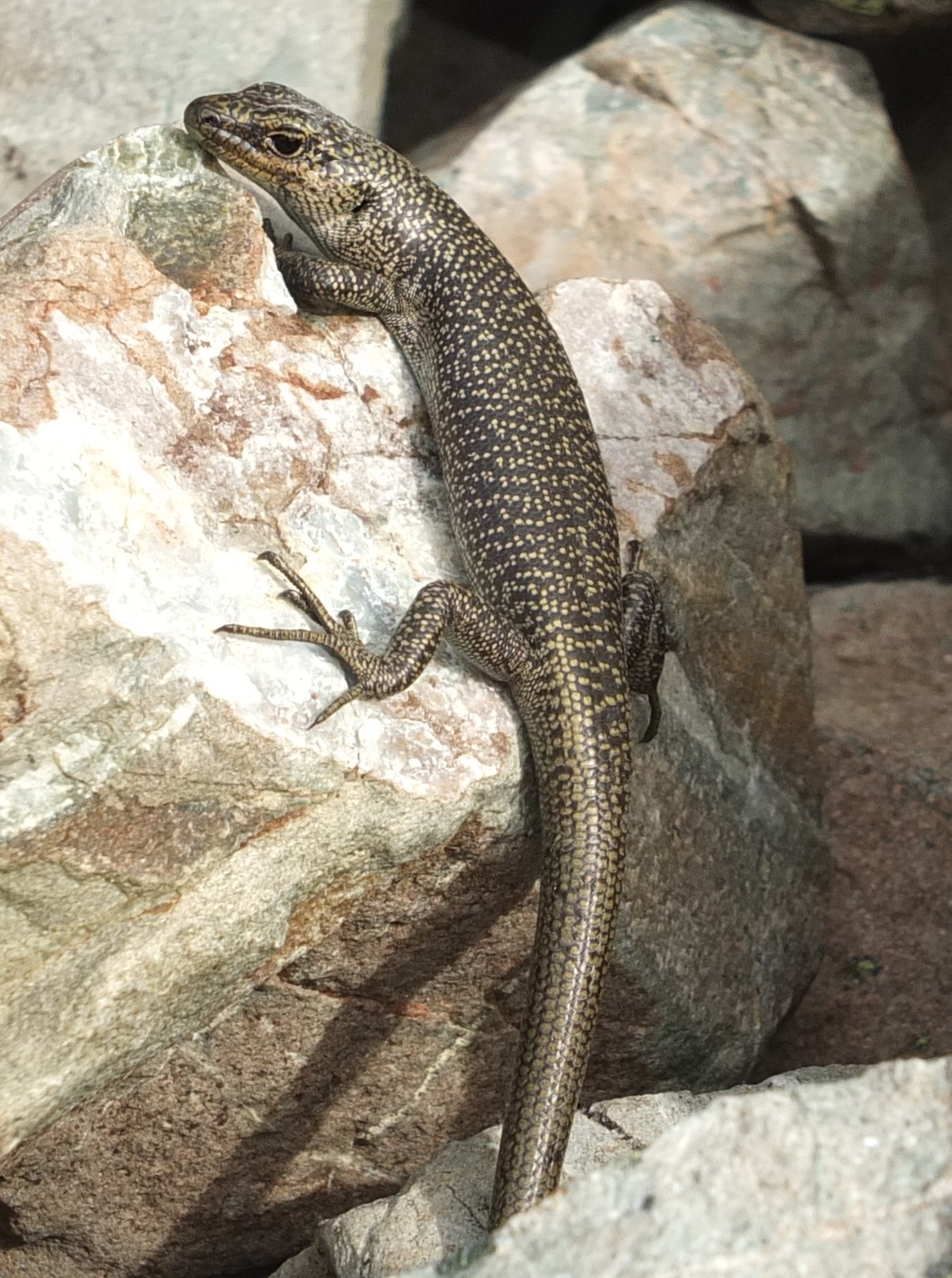
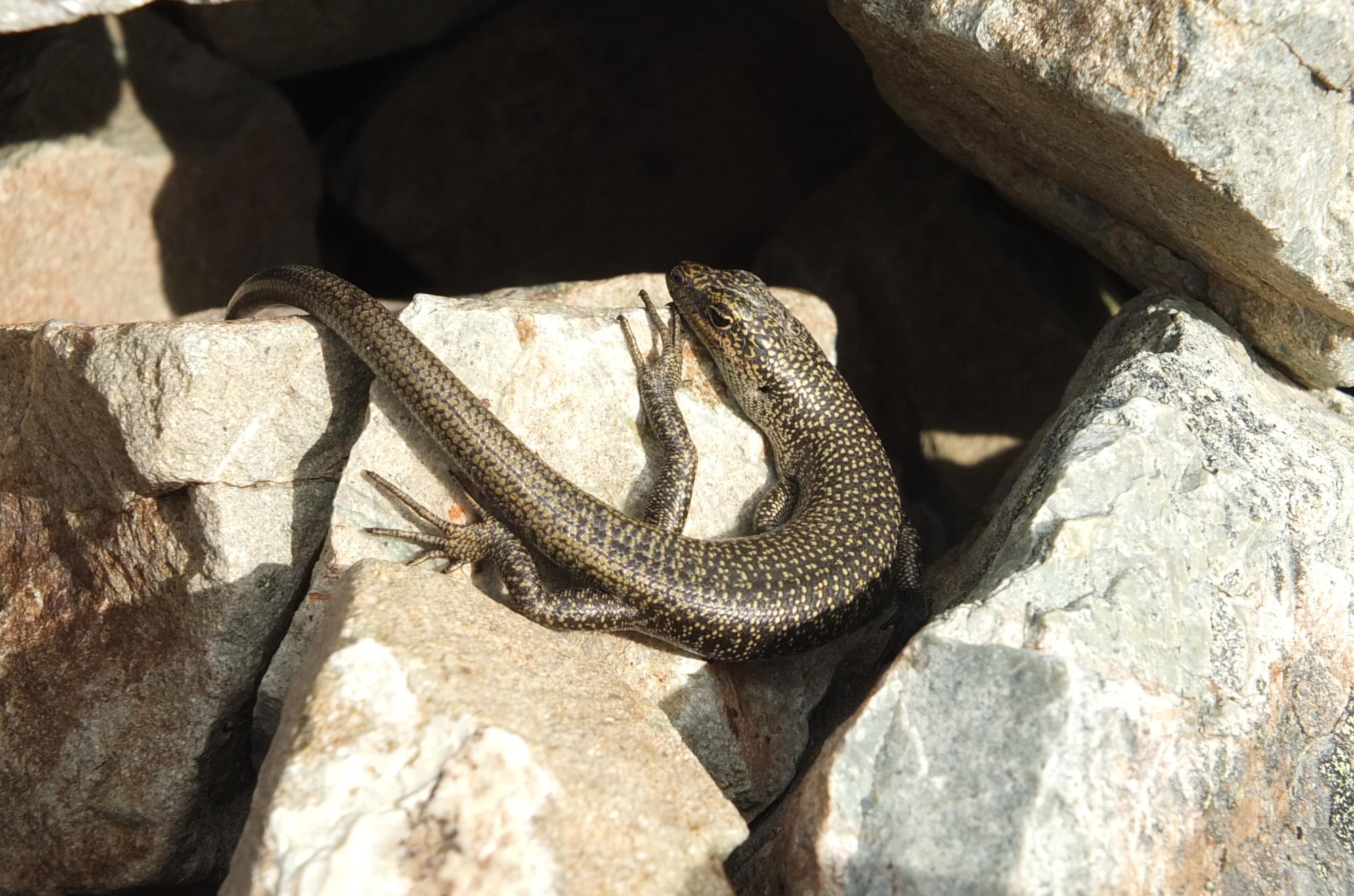
A gracile and elegant member of the scree skink complex, exhibiting alternating dashed patterns of tan/gold and black along its dorsal surfaces. Although visually similar to the alpine rock skink (Oligosoma aff. laxa "alpine rock") in both build and pattern, they are not sister species, and have evolutionarily converged in appearance.
Northern alpine rock skinks are characterised by their gold and black dashed appearance, often appearing as regular rows of gold dashes or dots on a black background. This regularity dissolves on the head and tail, where they respectively become irregular blotches or completely fade out to the background tan/gold colouration. The lateral surfaces are similar to the dorsal surface; however, the tan/gold dashes fade out to pale cream and become more linear toward the belly, creating a distinct ventral shift. The ventral surfaces appear to generally be pale cream/grey in colouration.
Life expectancy
Unknown.
Distribution
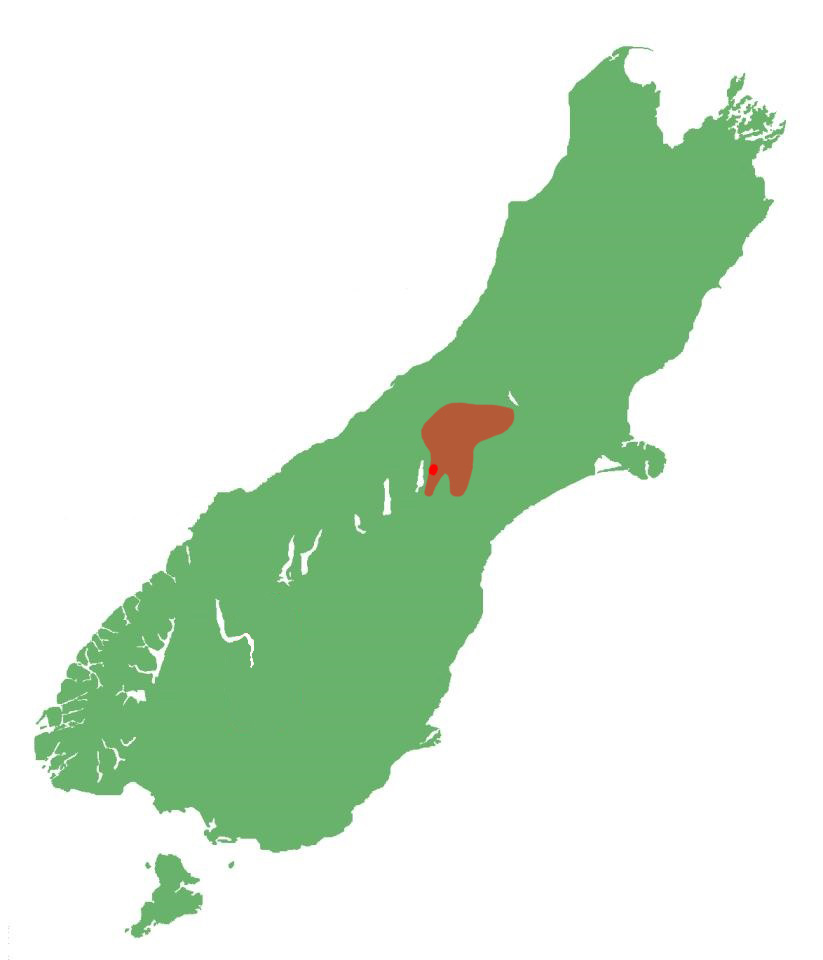
Currently known from a single site within the Two Thumb Range, although potential populations have been observed as far north as the Mount Somers Range.
Ecology and habitat
Similar to other members within the Scree skink complex, they are a diurnal, terrestrial, and saxicolous species that is extremely active and can be seen moving around scree systems.
Social structure
Unknown.
Breeding biology
Unknown.
Diet
Most likely feeds on invertebrates and possibly the fruits of native shrubs.
Disease
Unknown.
Conservation strategy
Classified as Threatened - Nationally Critical, due to its restricted distribution. Because this species was only recently identified, understanding its ecology and biology is highly important. Because it is also a large species of skink, it is likely to be more susceptible to predation from mammalian predators.
Interesting notes
This species may have been observed as far back as 2015, prior to the discovery of the alpine rock skink (Oligosoma aff. laxa "alpine rock"). However, the currently sampled population was only discovered around 2020 by Marieke Lettink.
References
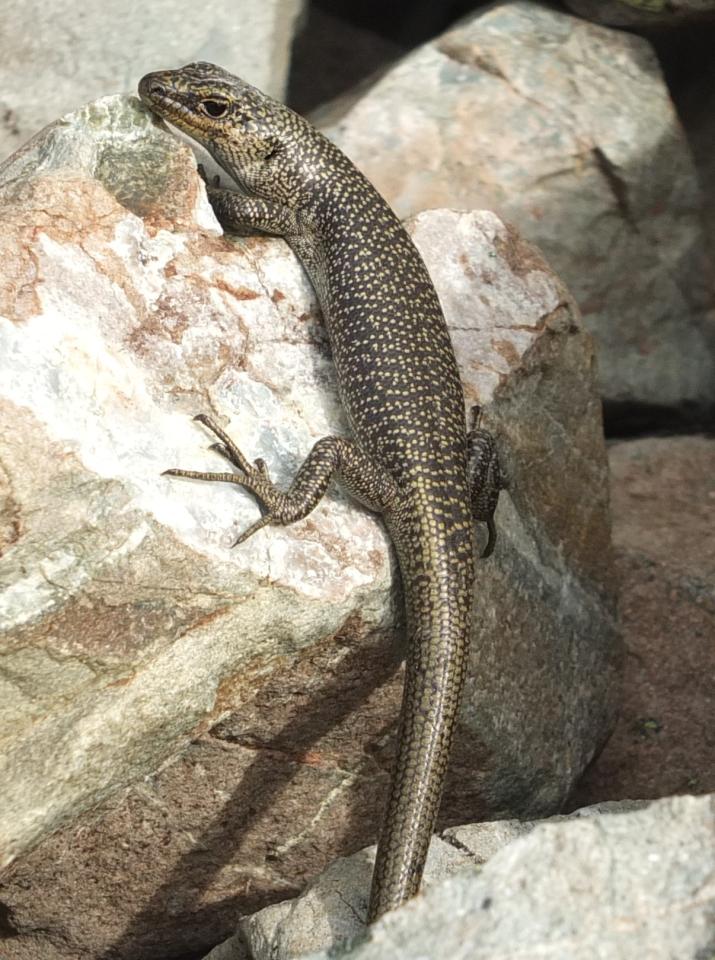
Northern alpine rock skink (Two Thumb Range) © Marieke Lettink