Oligosoma aff. infrapunctatum "Cobble"
Cobble skink
Oligosoma aff. infrapunctatum "Cobble"
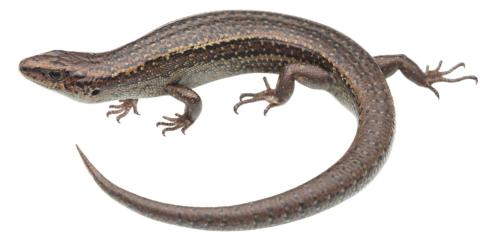
Length: SVL up to 67mm, with the tail being longer than the body length
Weight: up to 6 grams
Description
A relatively small lizard from the speckled skink group. Cobble skinks became well-known following 2016 when the entire known population had to be rescued from Cyclone Gita. Fortunately, in the subsequent years, several populations were discovered in more stable habitat along the same coastline, meaning that the species was not at imminent risk of extinction. Following the discovery of these new populations, the animals that were taken into captivity were repatriated back to the wild, in stable habitat near the site they were collected from.
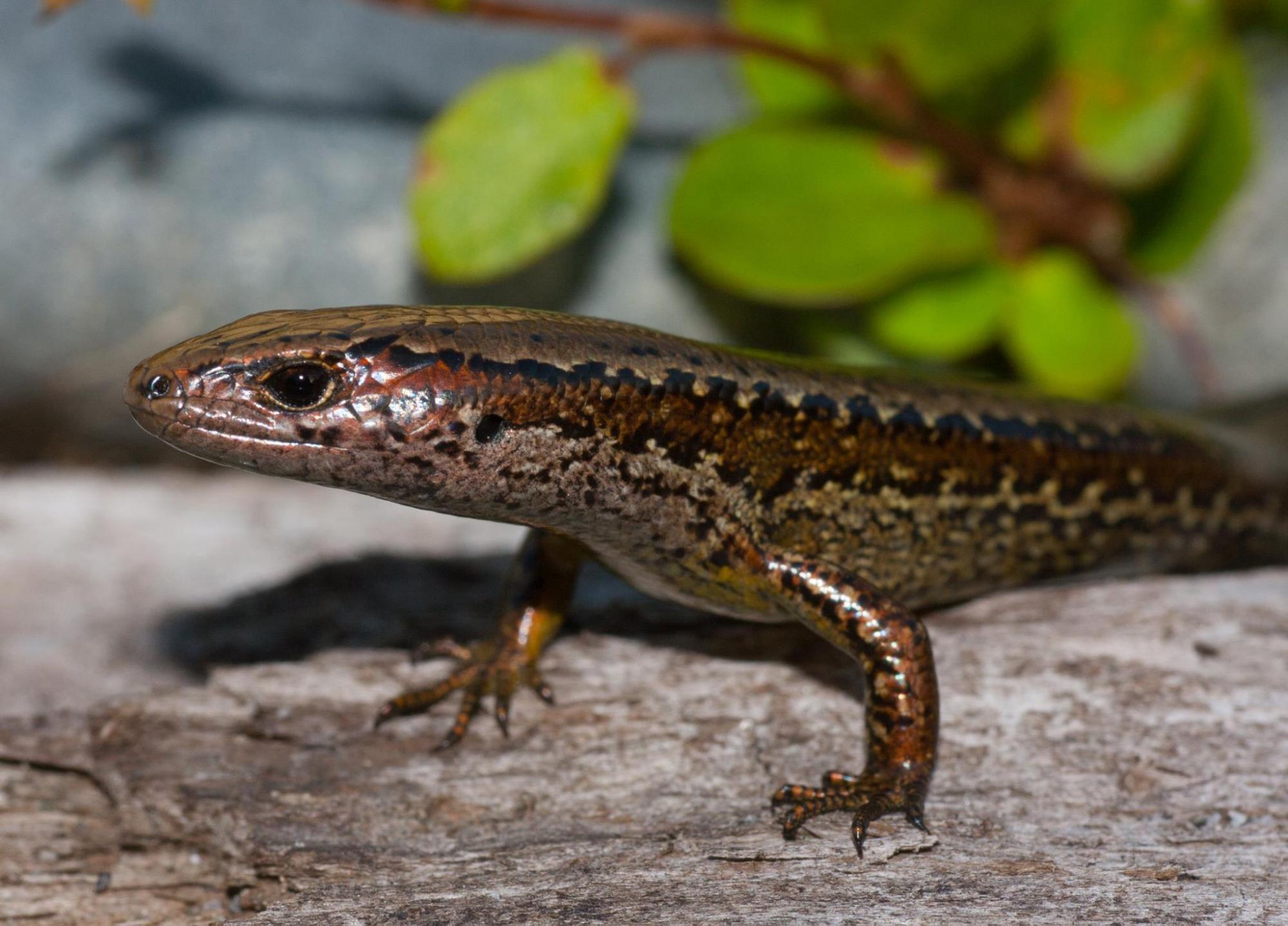
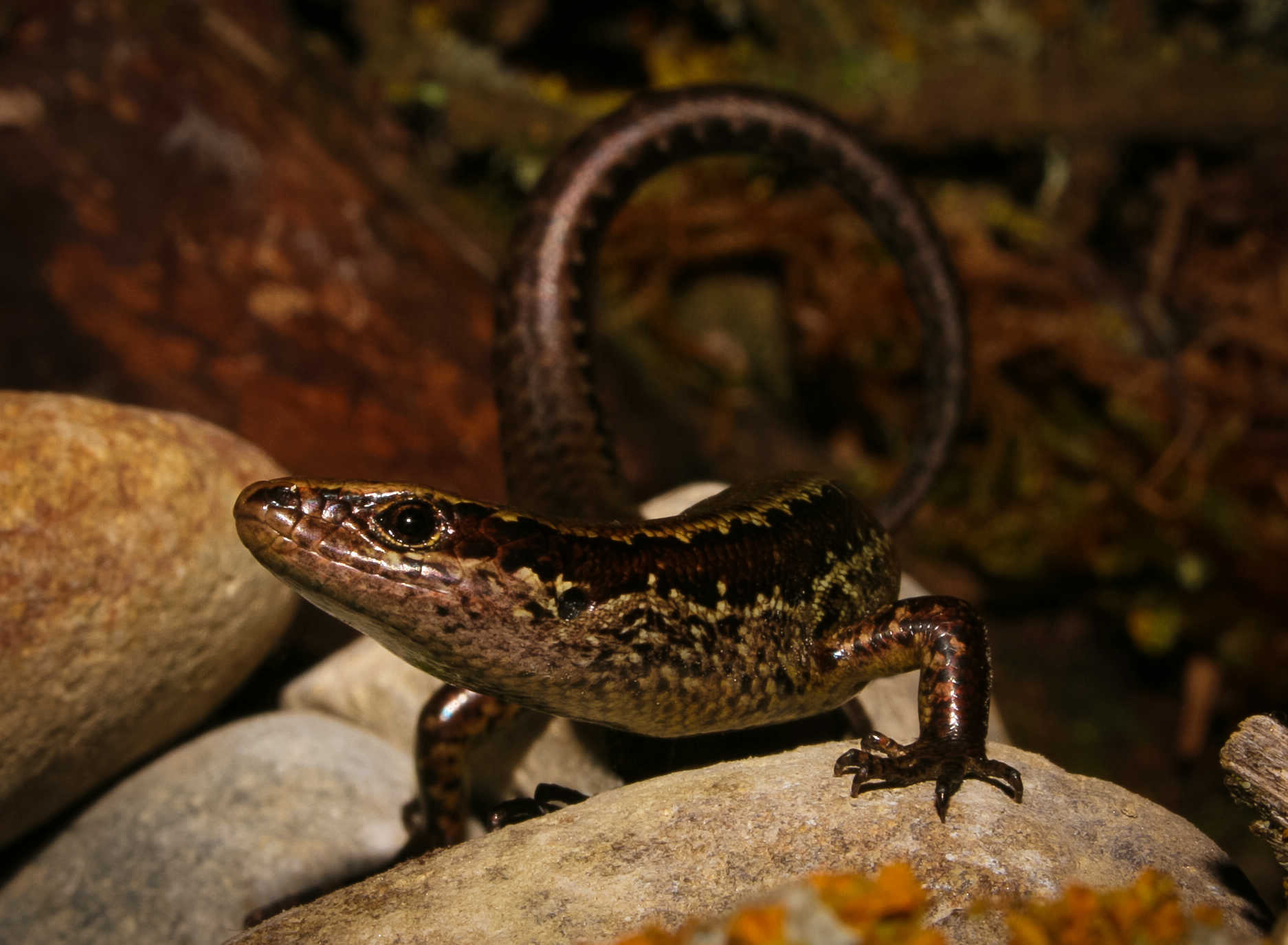
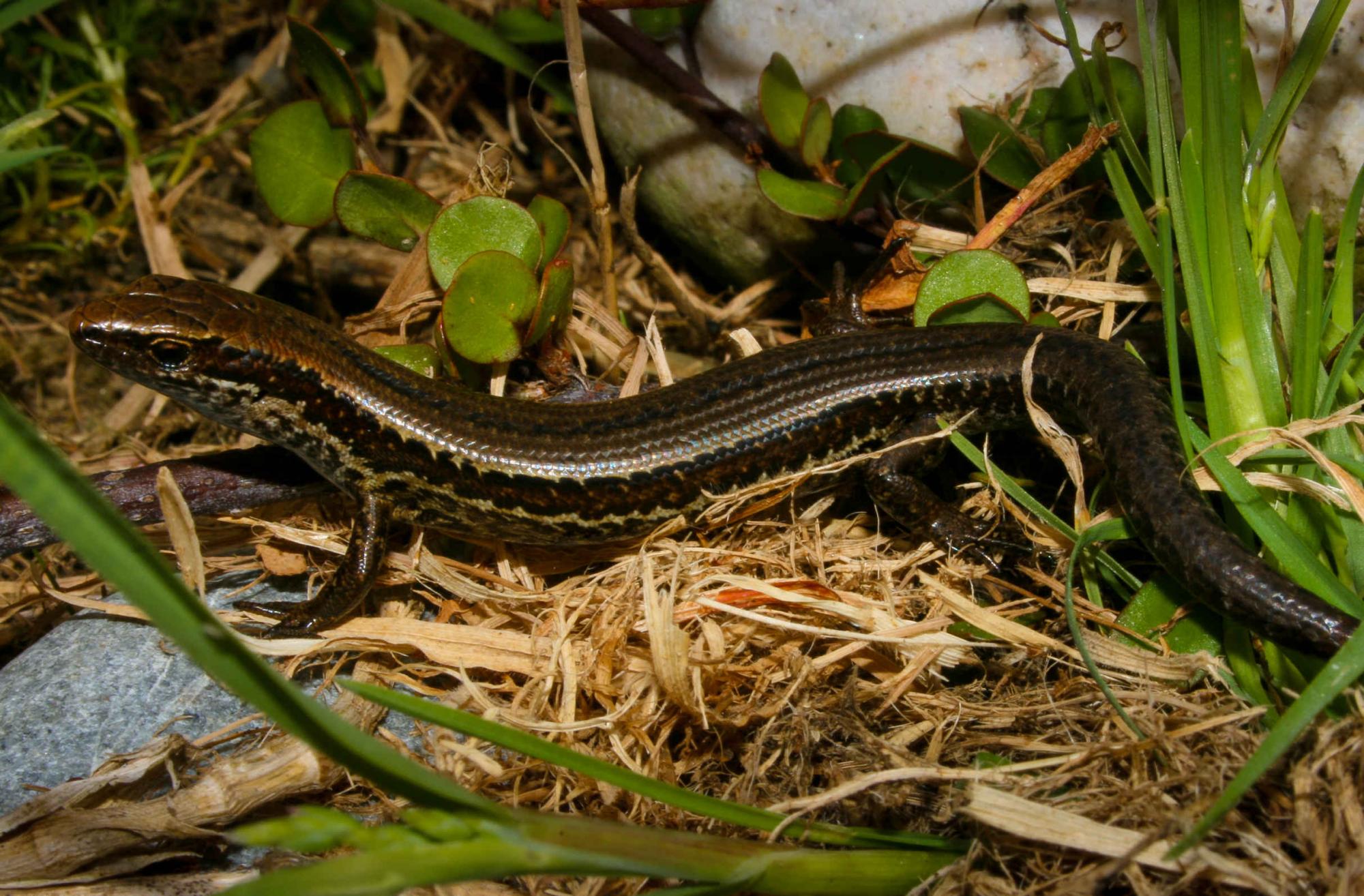
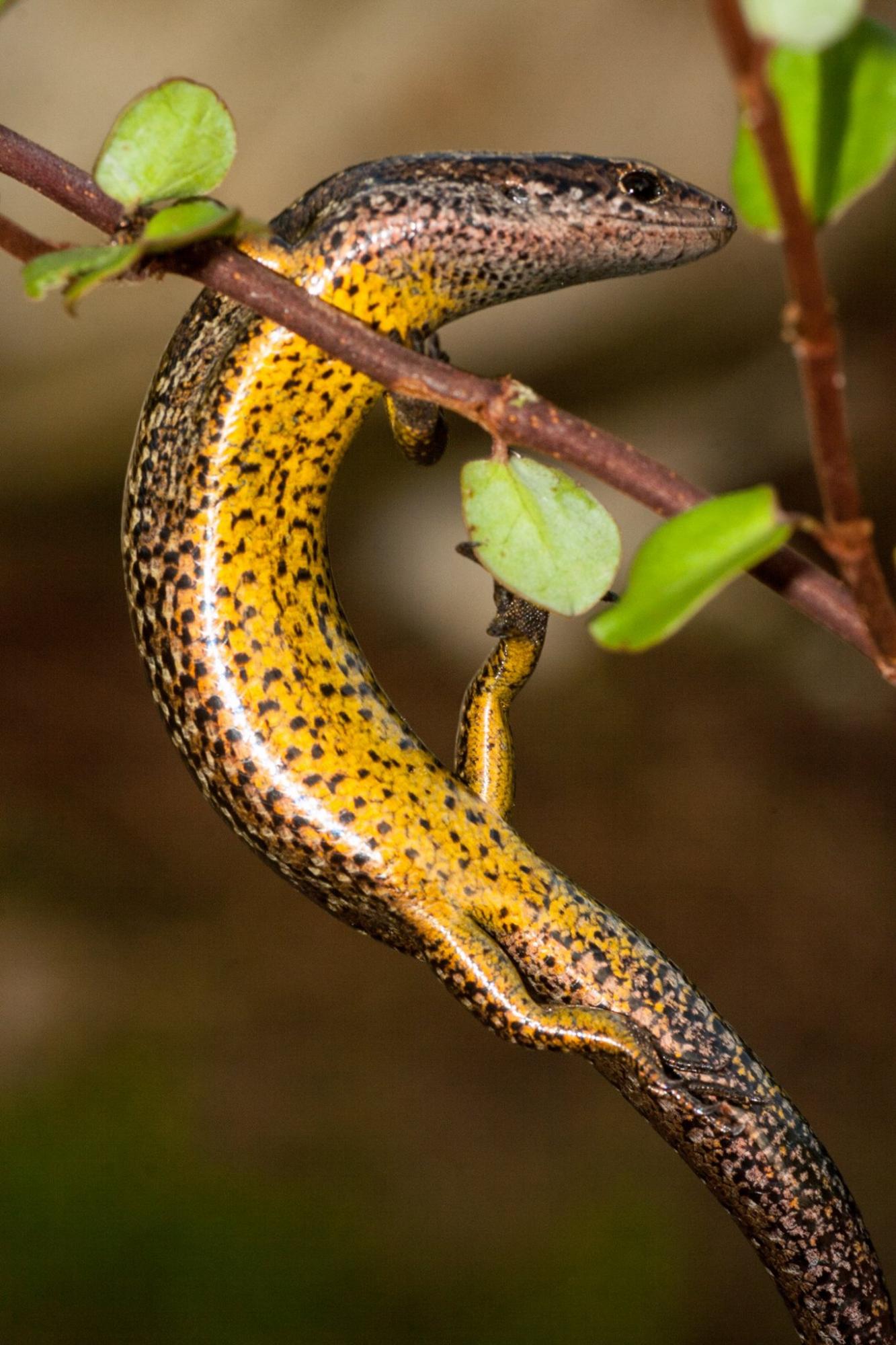
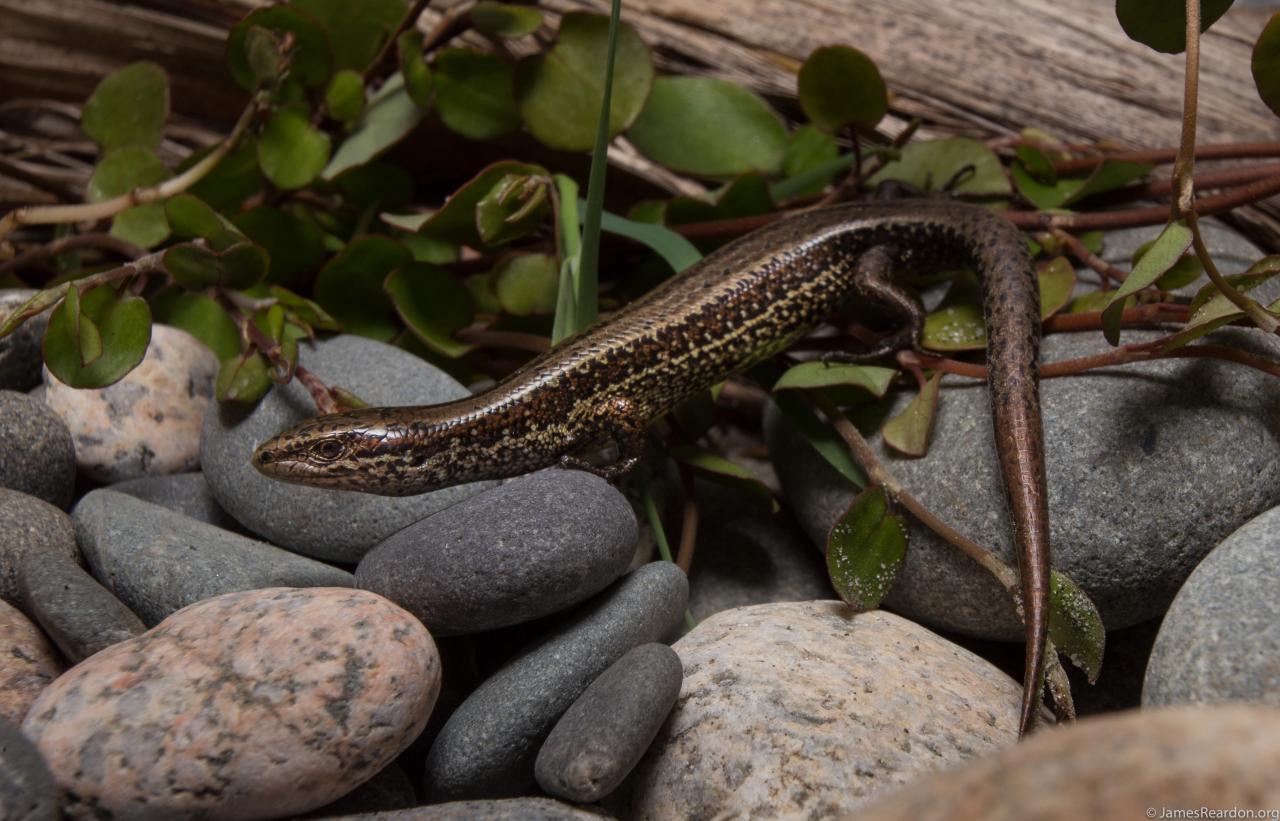
Snout is short and rounded; eyes are relatively large compared to related species. Dorsal surfaces are golden to dark brown, with or without a mid-dorsal stripe. When present, a series of irregular pale flecks often run down either side of the mid-dorsal stripe, but the rest of the dorsum is otherwise unmarked. On the tail, pale blotches become more regular and aligned in rows. Lateral surfaces have a broad mahogany-coloured lateral stripe, which is crenulated at the edges, with regular paler flecks at the edges, and bordered above and below by paler stripes. Throat is grey and ventral surfaces are yellow; both are heavily flecked with black, with finer flecking on the throat. Lacks a white stripe on the forelimb.
Life expectancy
Unknown.
Distribution
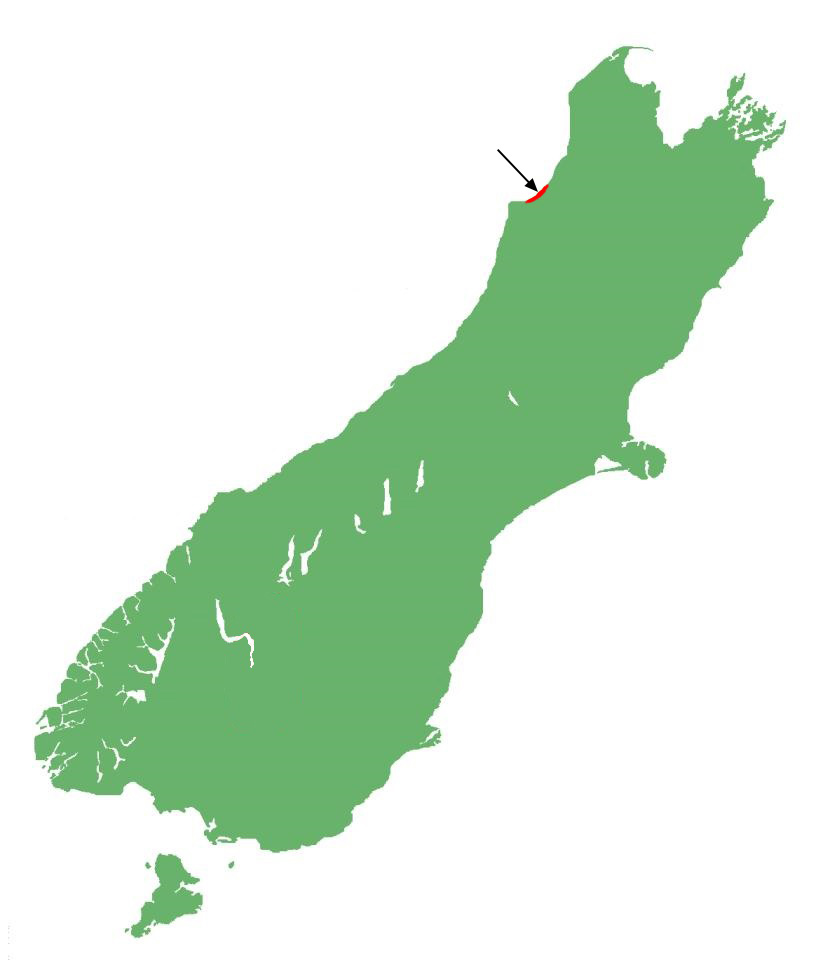
Cobble skinks are seemingly restricted to a small section of coastline, spanning from Cape Foulwind to around Granity on the West Coast.
Ecology and habitat
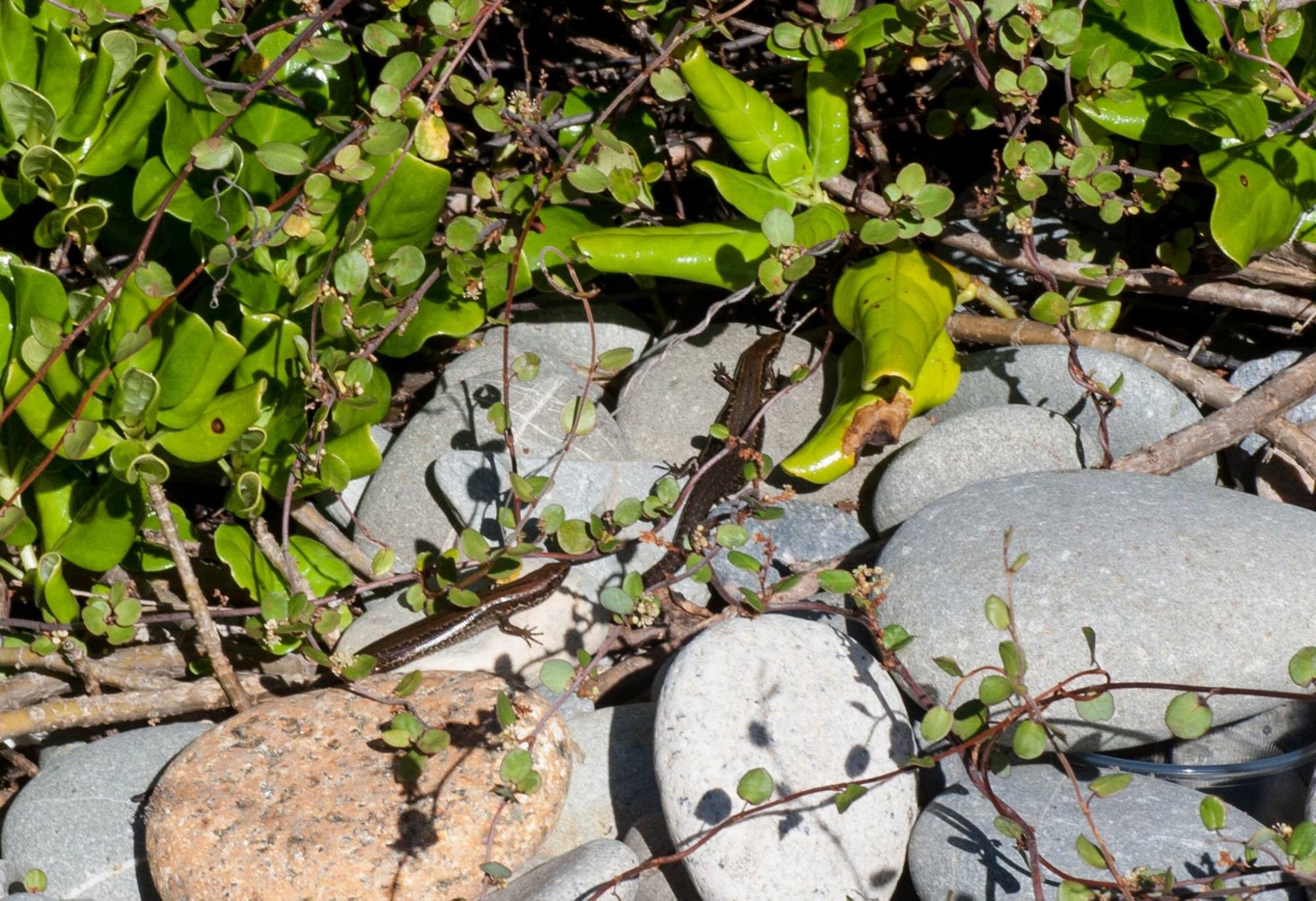
Cobble skinks are a secretive species. They are diurnal and heliothermic, but will usually bask cryptically near rocky cover.
Inhabits deep cobblestone habitat lightly covered with Muehlenbeckia spp. just above the high tide mark.
Social structure
Unknown.
Breeding biology
Females are presumed to give birth to around two offspring annually.
Diet
Cobble skinks are insectivorous and feed on a range of small invertebrates. In common with related species of New Zealand skinks (Oligosoma spp.), Cobble skinks may potentially feed on the fruit of native plants such as Muehlenbackia spp.
Disease
Unknown.
Conservation strategy
In 2016, Cyclone Gita threatened to wipe out the population / habitat of cobble skinks. In response the entire population (36 skinks) were rescued from the wild and a captive population established at Auckland Zoo as insurance against the species' demise.
Following the rescue, cobble skinks were bred in captivity at Auckland Zoo, and on 15 January 2024 the captive population (consisting of 148 individuals - mostly captive born) were released at a new site near the original source population.
Interesting notes
Cobble skinks were only discovered in 2007, living on the beachfront in Granity amongst a population of Buller skinks (Oligosoma aff. newmani "Buller").
Surveys in 2015 and 2016 established that the population was small, restricted, and their habitat was eroding. So, when Cyclone Gita threatened to wipe out their habitat in 2016, the entire known population of cobble skinks was rescued and brought into captivity at Auckland Zoo.
For several years, cobble skinks were considered to be potentially extinct in the wild. However, surveys in 2021 found new populations of this species, including one consisting of an estimated 22,000 individuals. As such, ex-situ management was no longer considered necessary for this species, and on 15 January 2024 the insurance population held at Auckland Zoo (consisting of 148 individuals) was released into the wild at a new location on the South Island's West Coast.
References
Hitchmough, R.A., Barr, B., Lettink, M., Monks, J., Reardon, J., Tocher, M., van Winkel, D., Rolfe, J. (2016). Conservation status of New Zealand reptiles, 2015; New Zealand threat classification series 17. Wellington: New Zealand Department of Conservation.
Jewell, T. (2011). A photographic guide to reptiles and amphibians of New Zealand. Auckland: New Holland Publishing.
van Winkel, D., Baling, M. & Hitchmough, R. (2018). Reptiles and Amphibians of New Zealand: A field guide. Auckland: Auckland University Press, 376 pp.
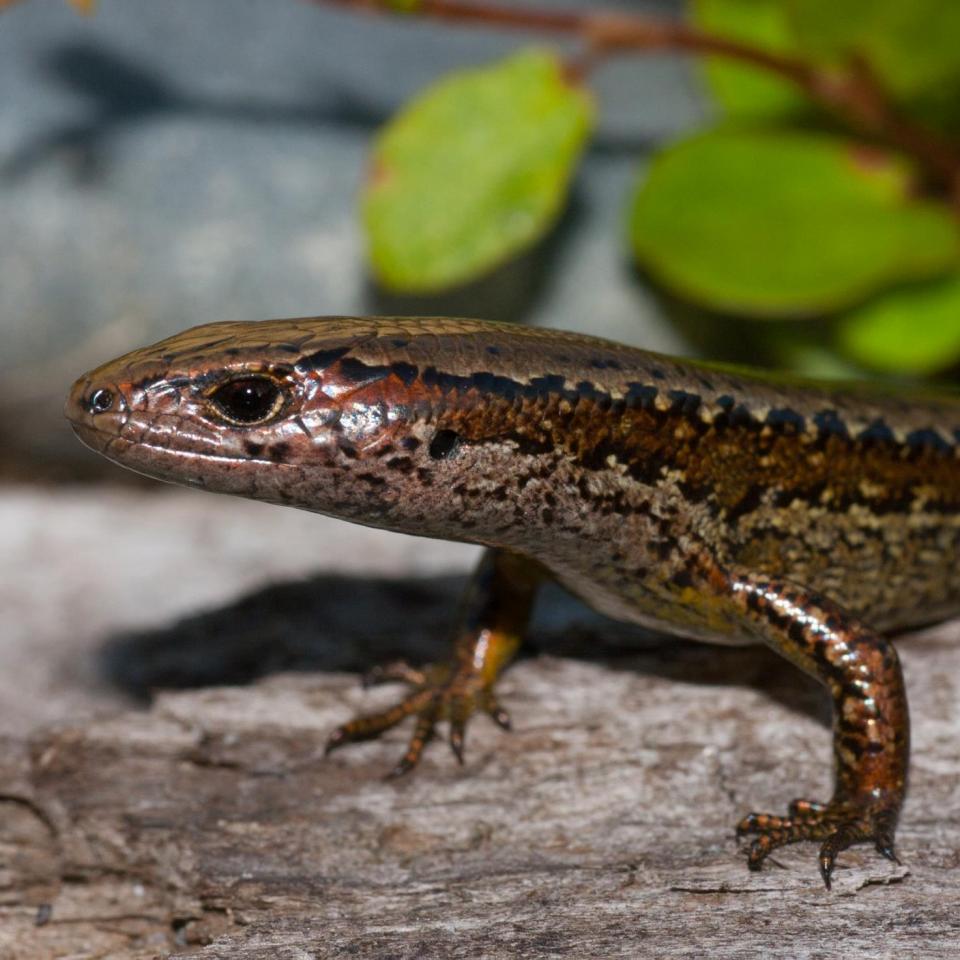
Cobble skink basking in cobble habitat (Granity, West Coast). © Tony Jewell