Naultinus tuberculatus
West Coast green gecko
Naultinus tuberculatus
Length: SVL up to 85mm, with the tail being longer than the body length
Weight: up to 14.5 grams
Description
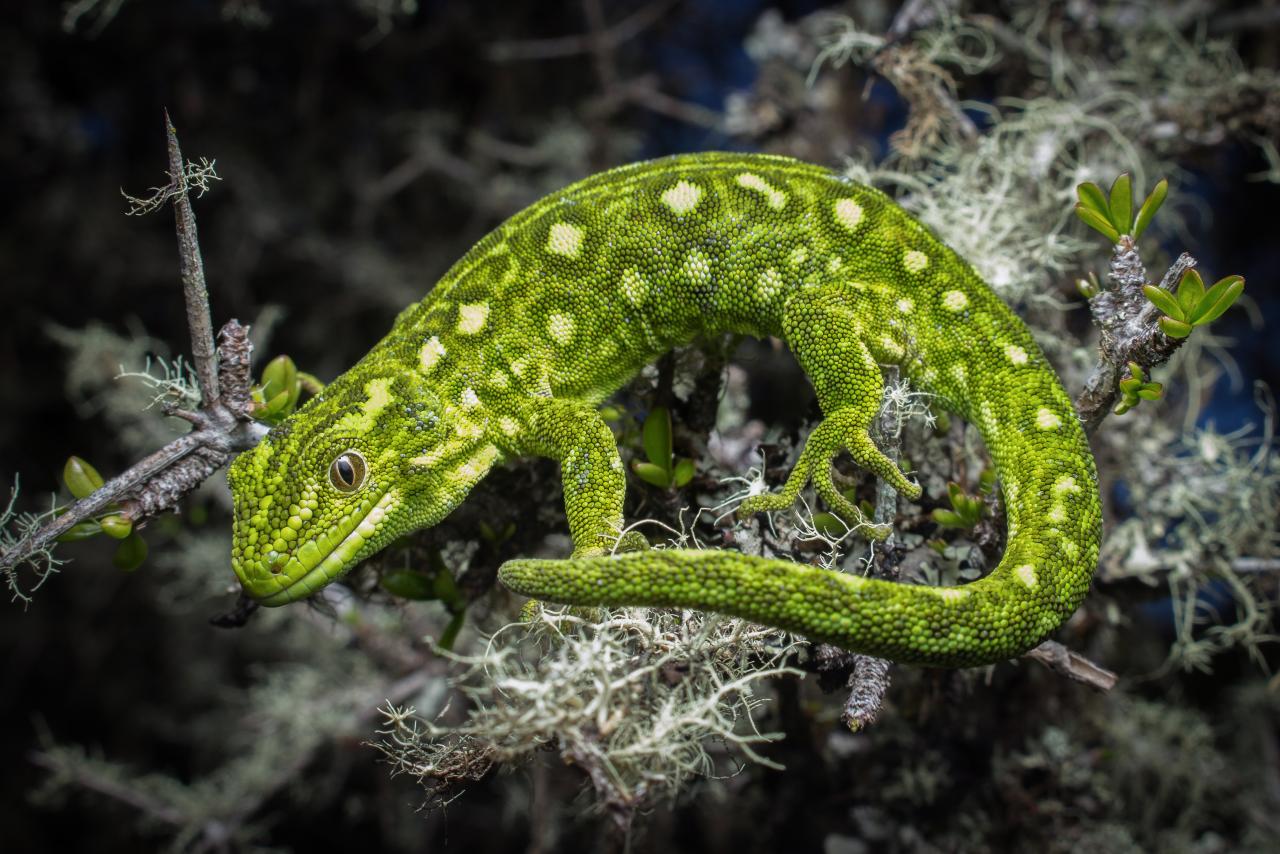
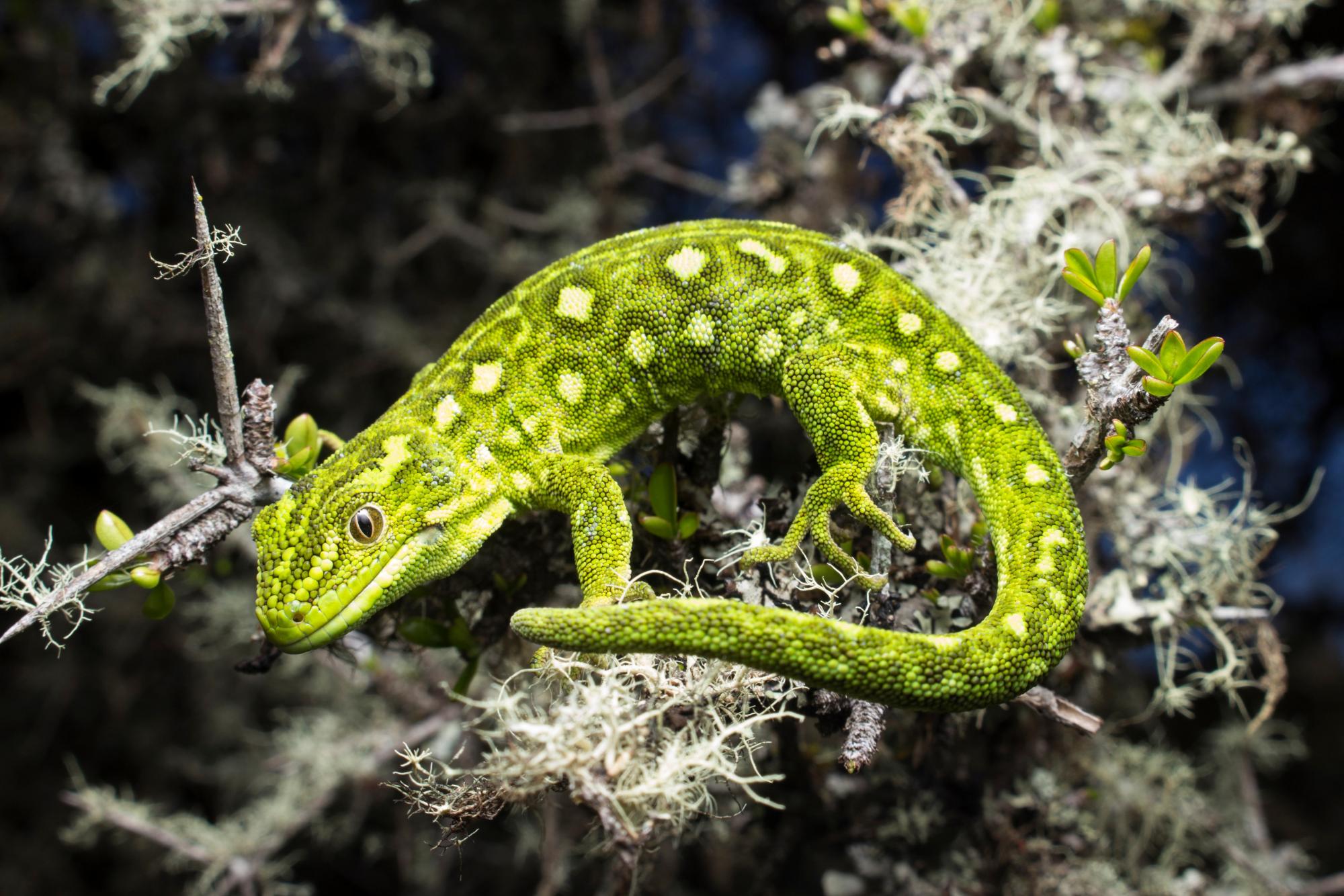
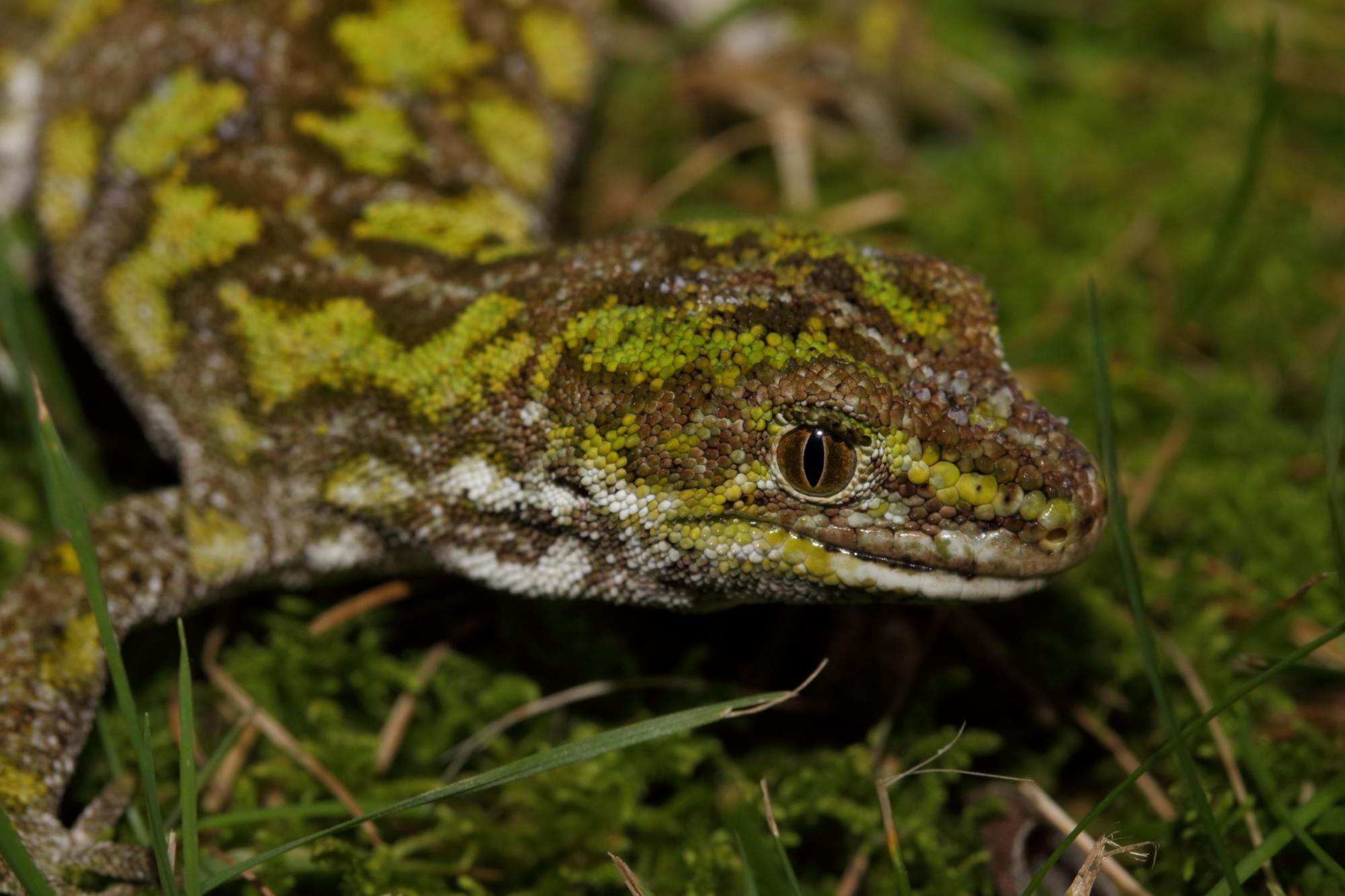
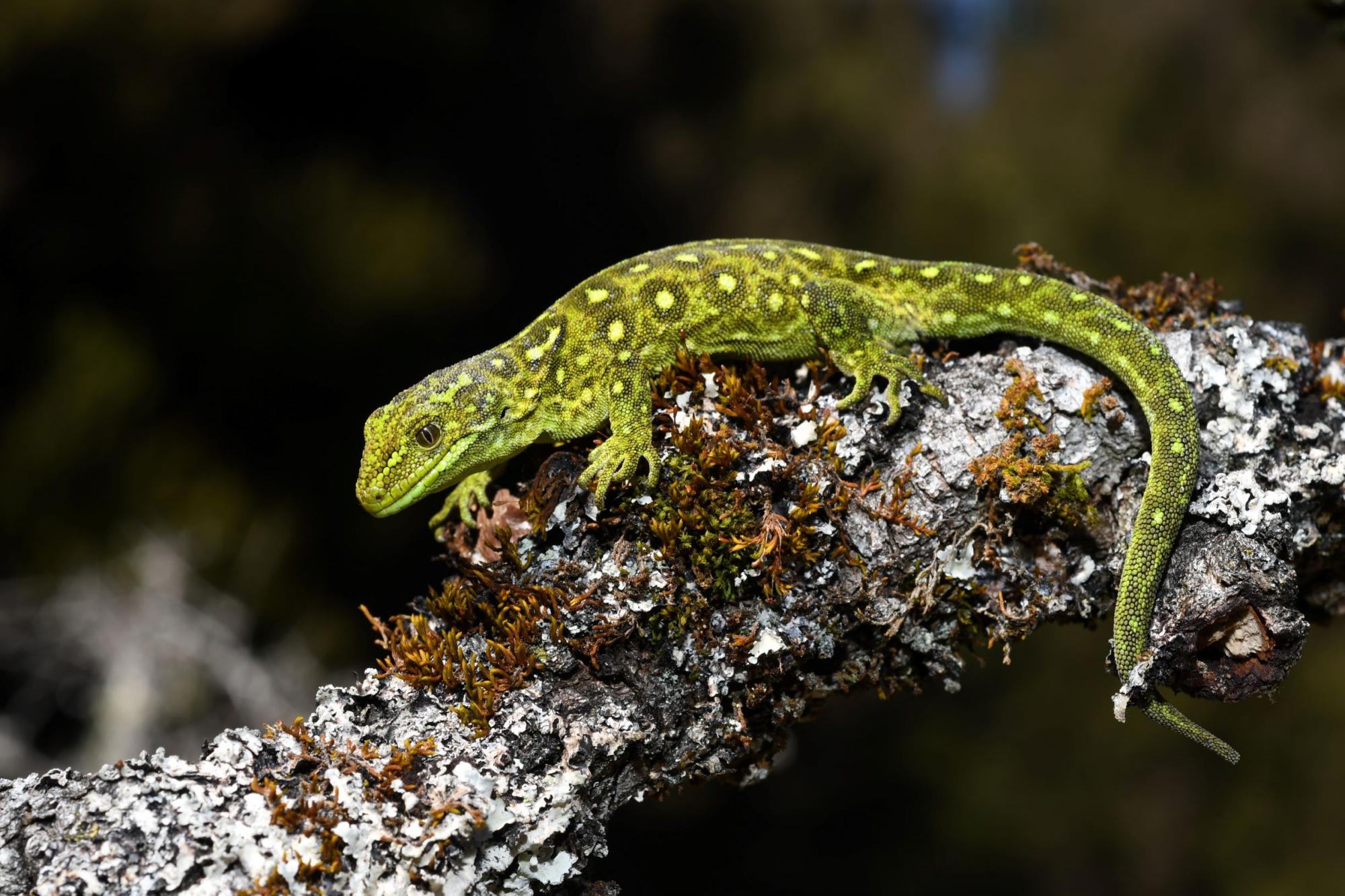
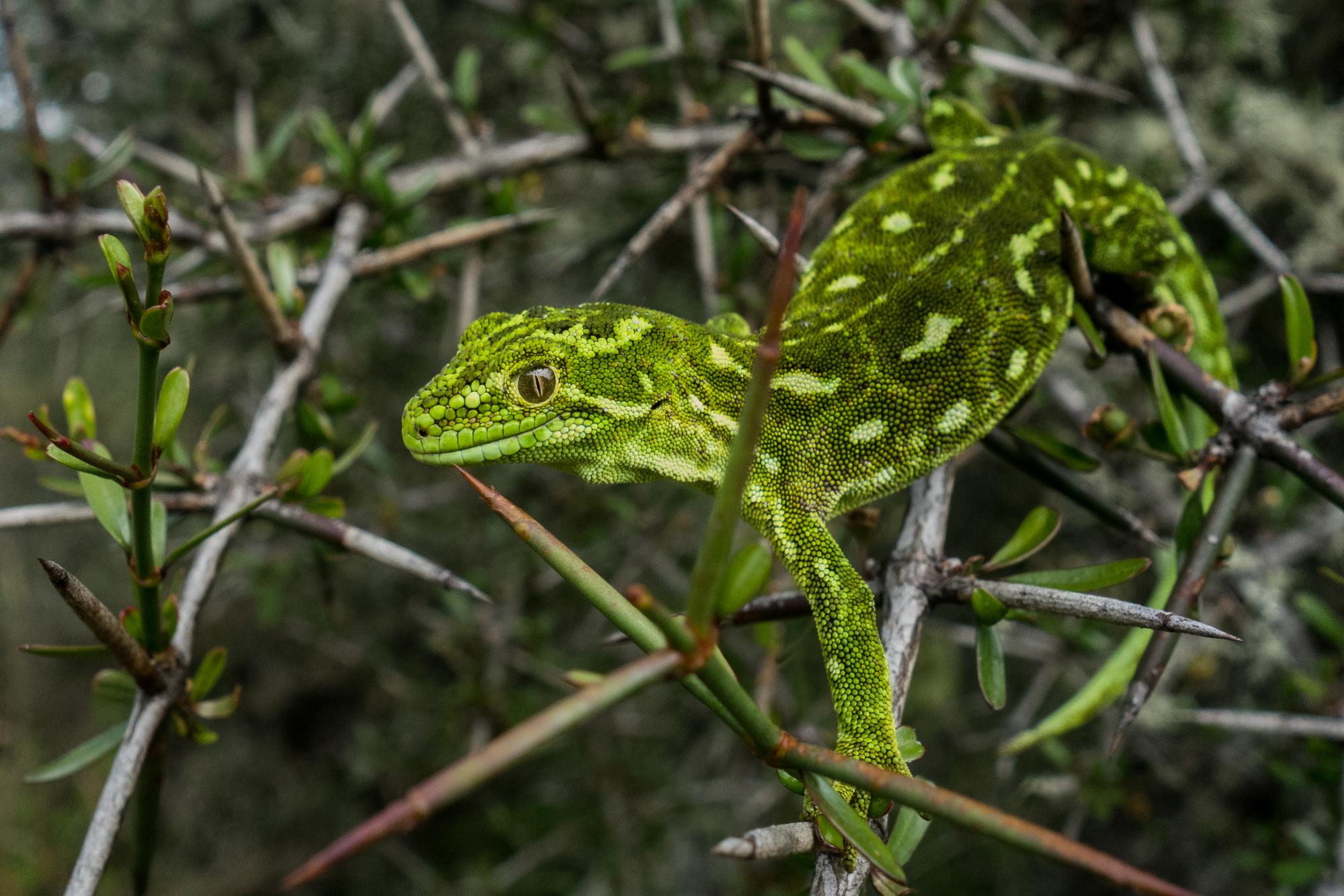
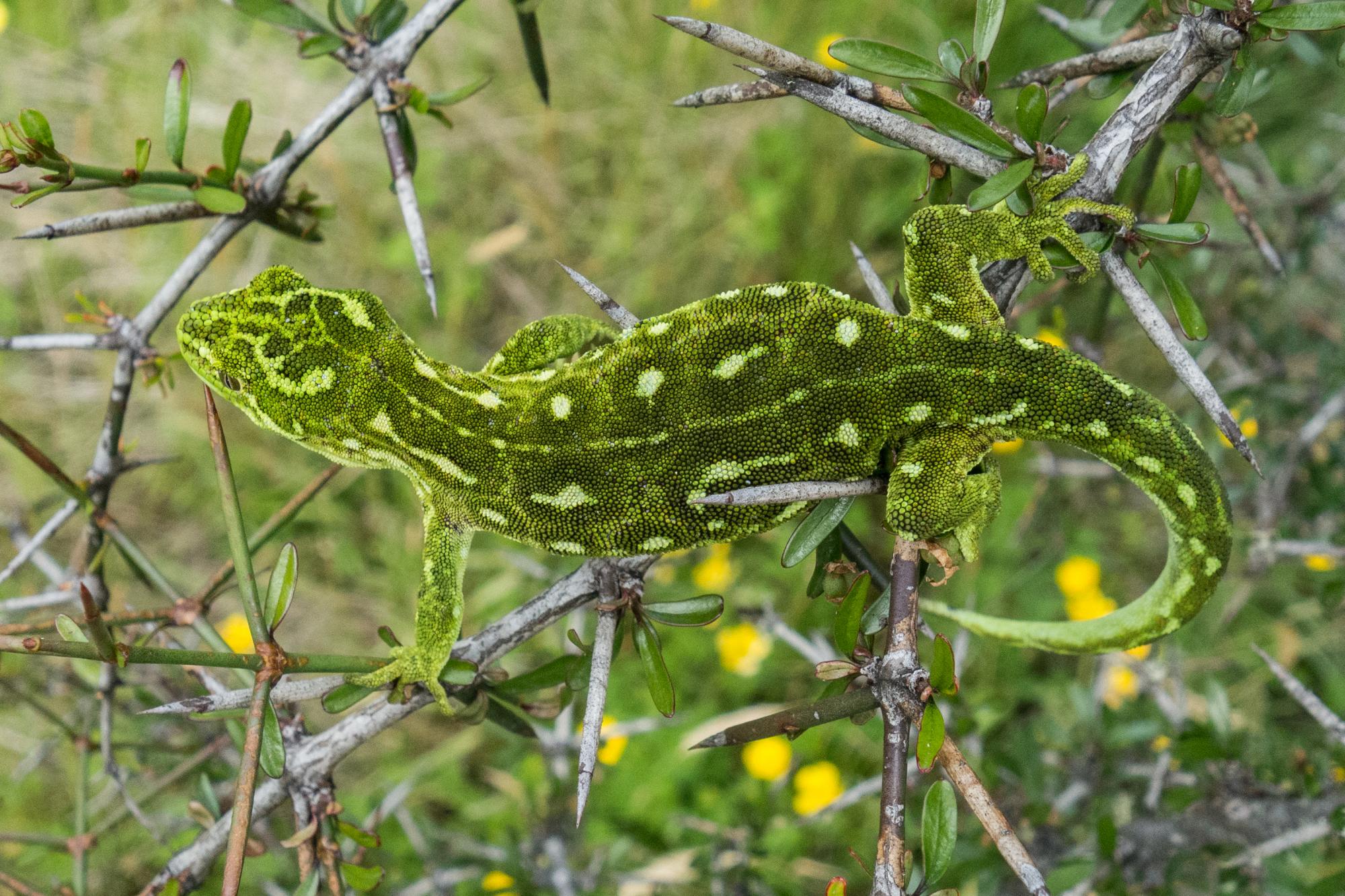
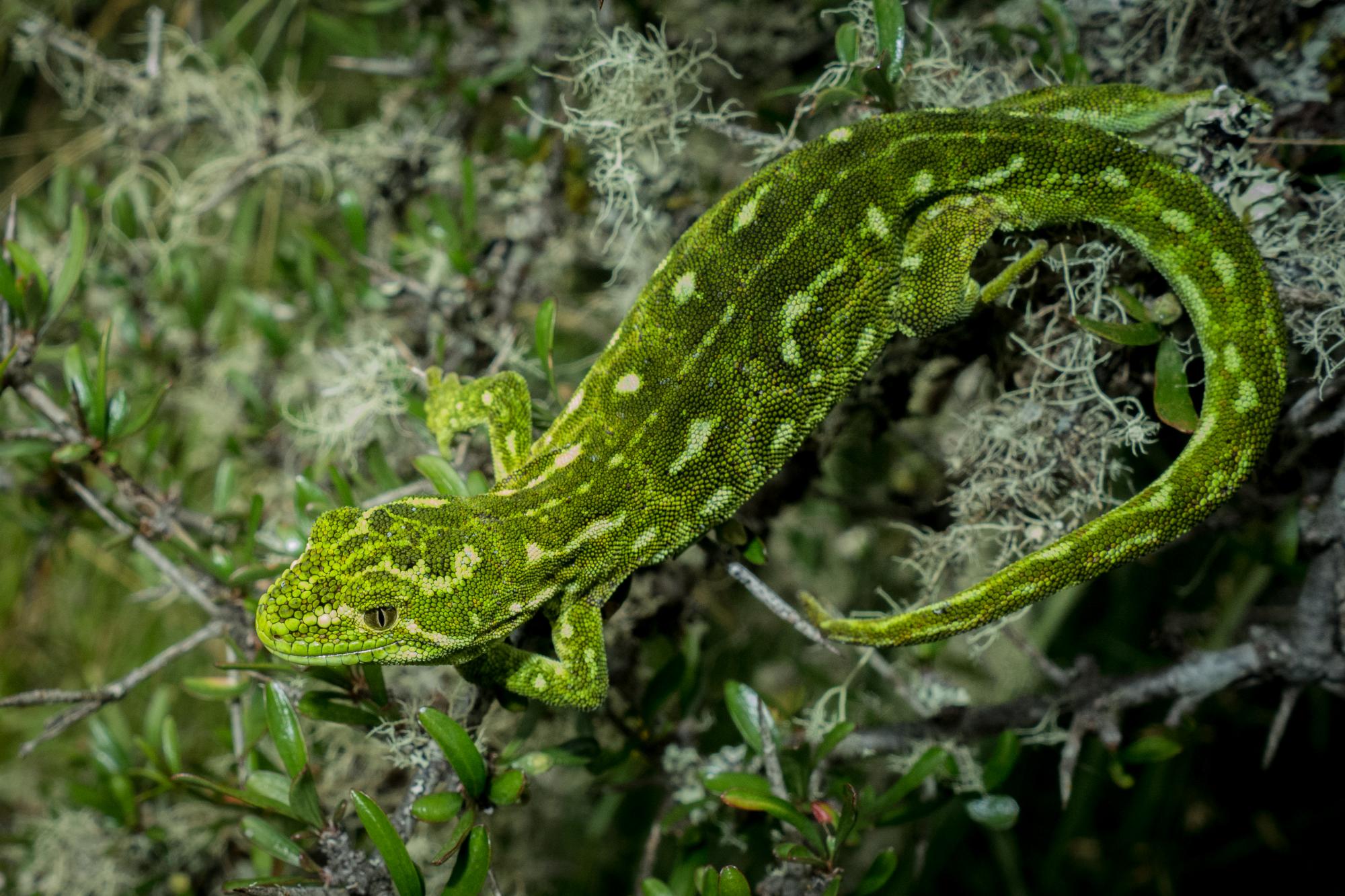
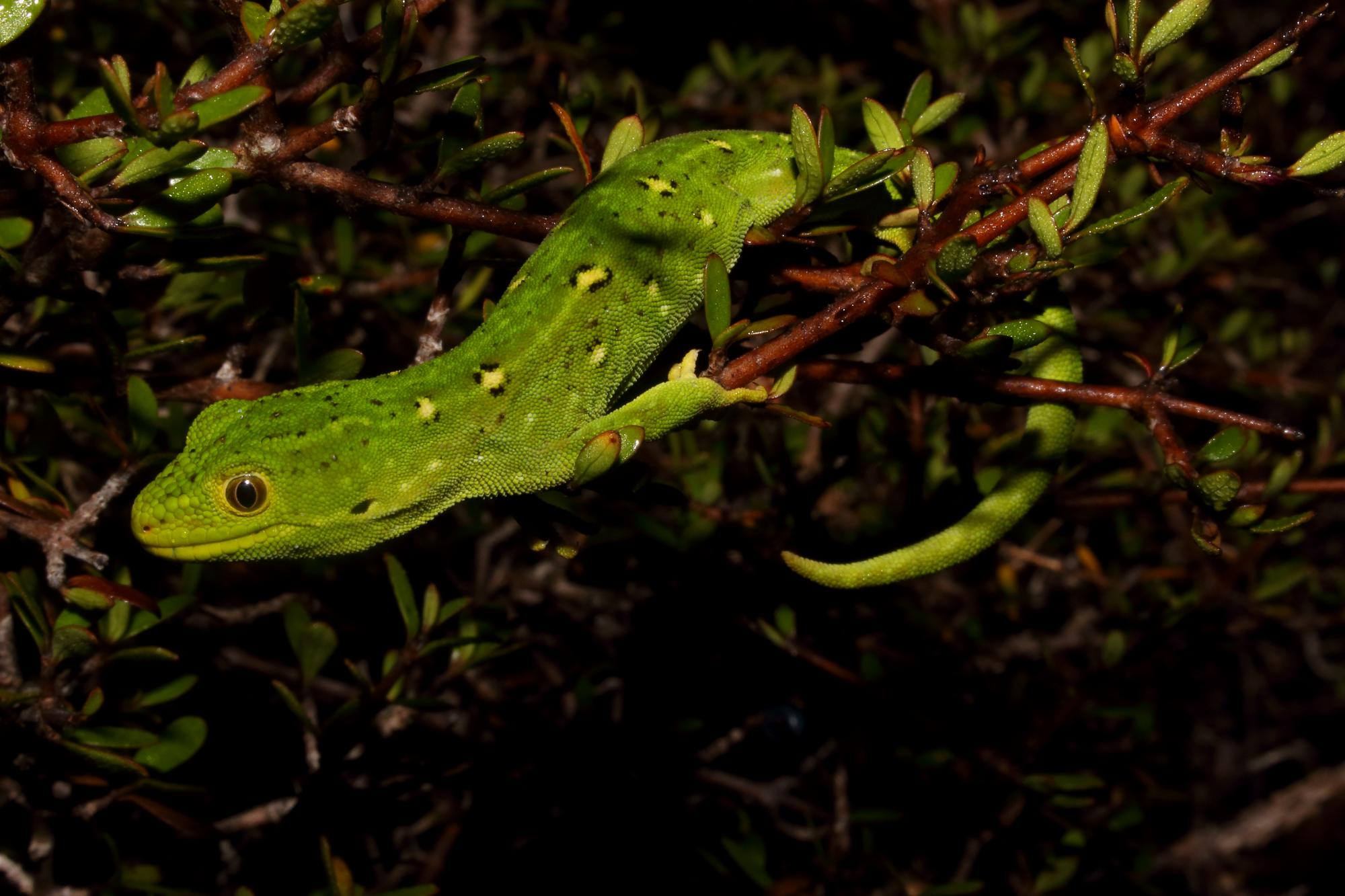
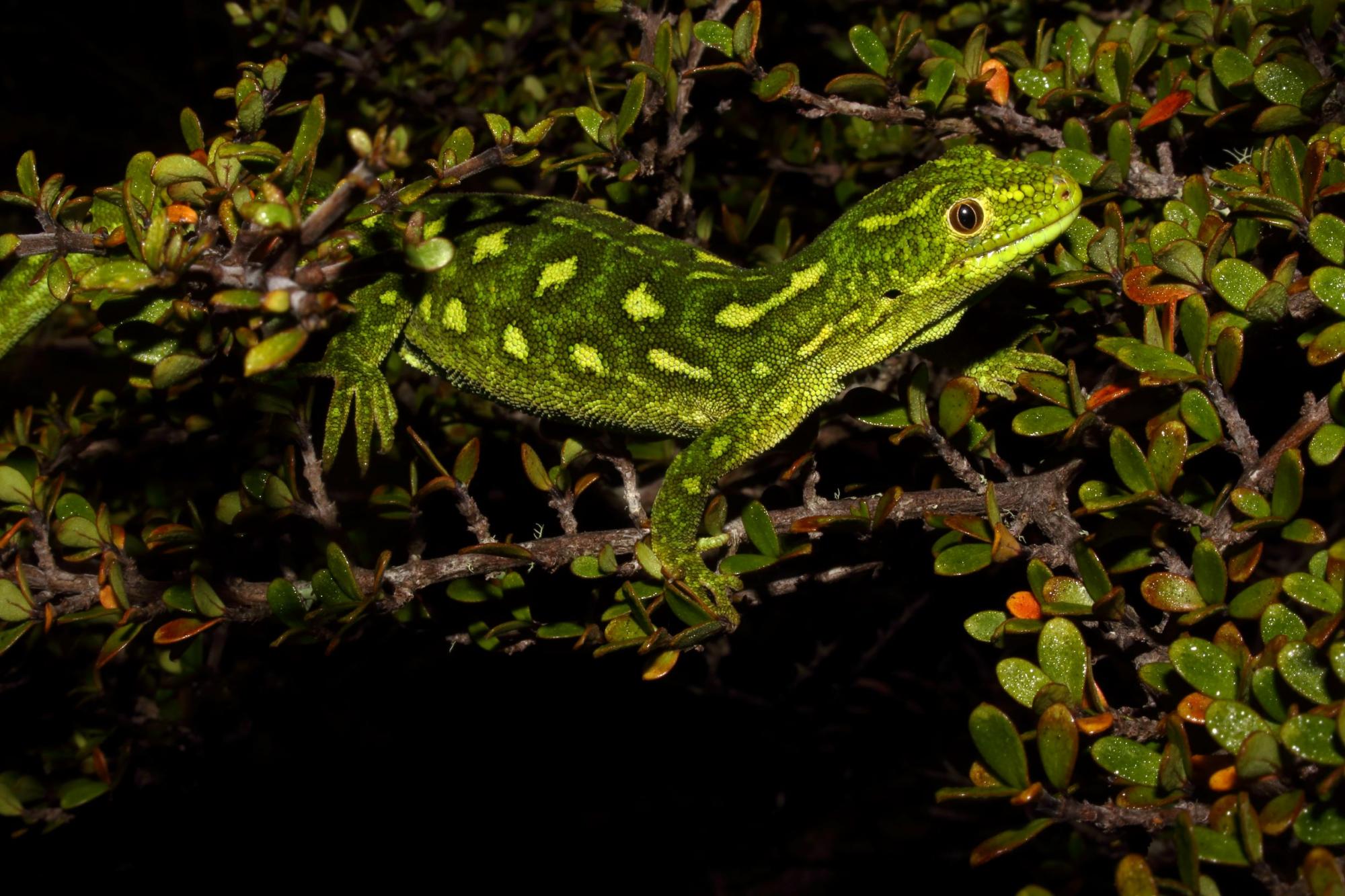
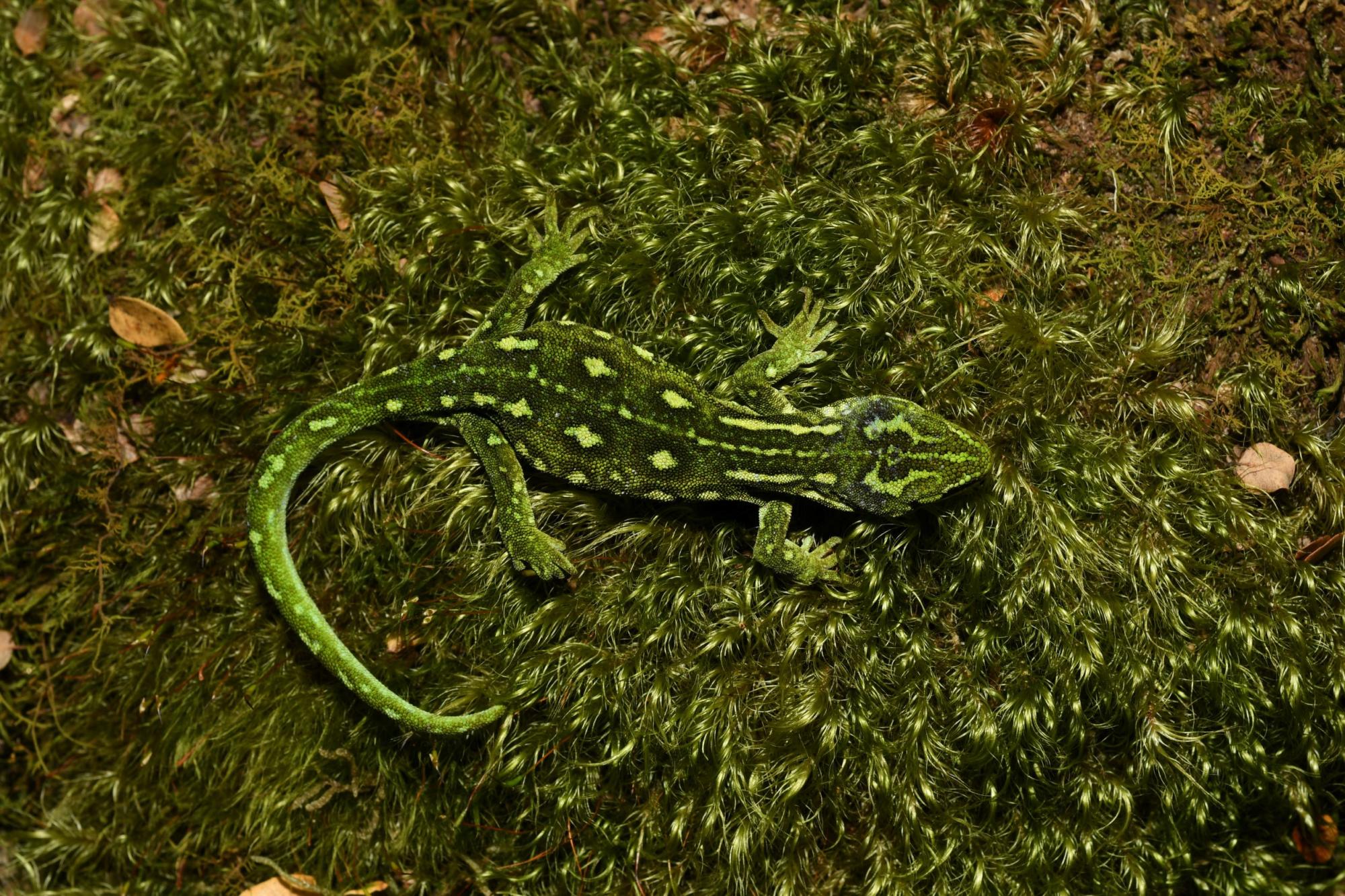
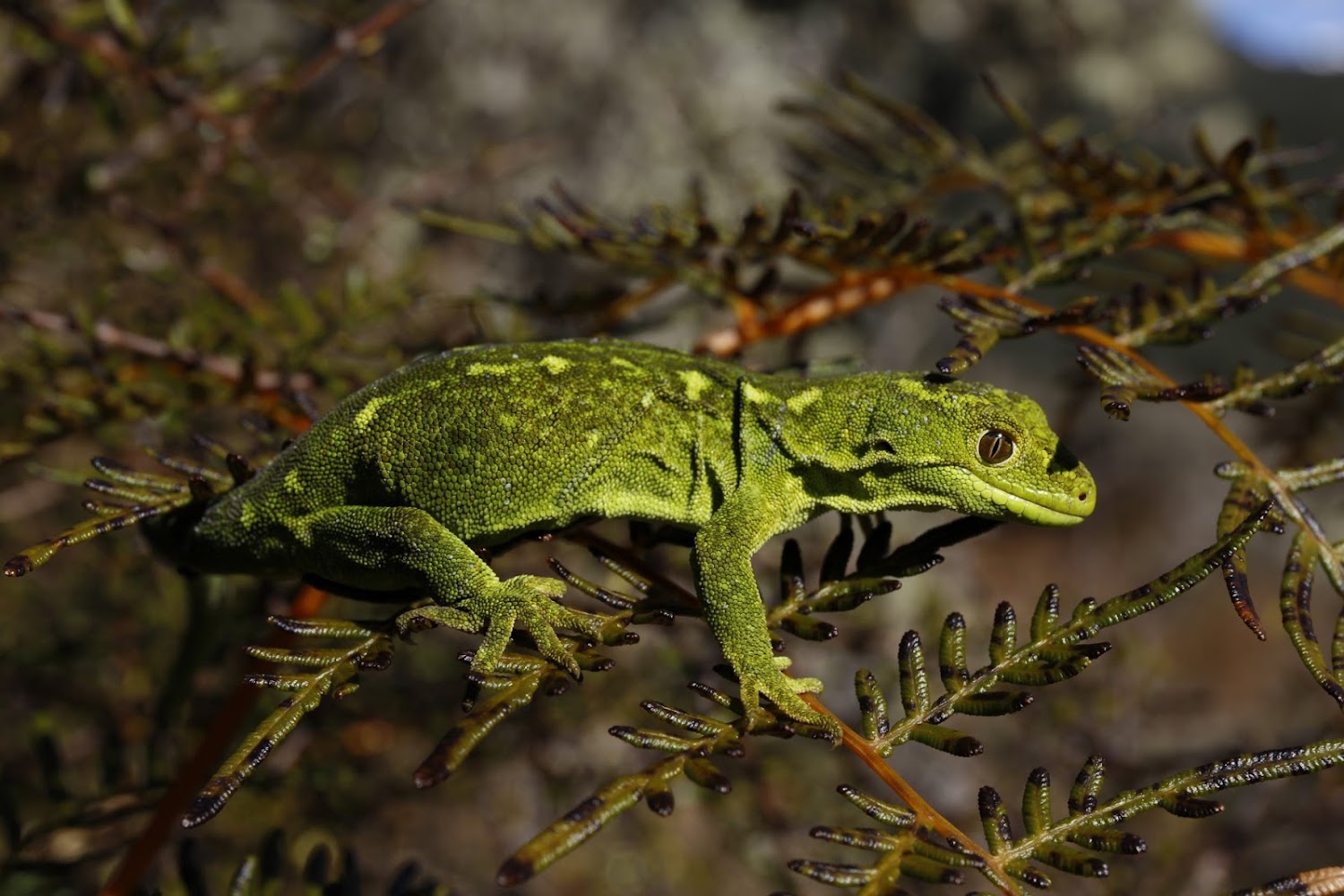
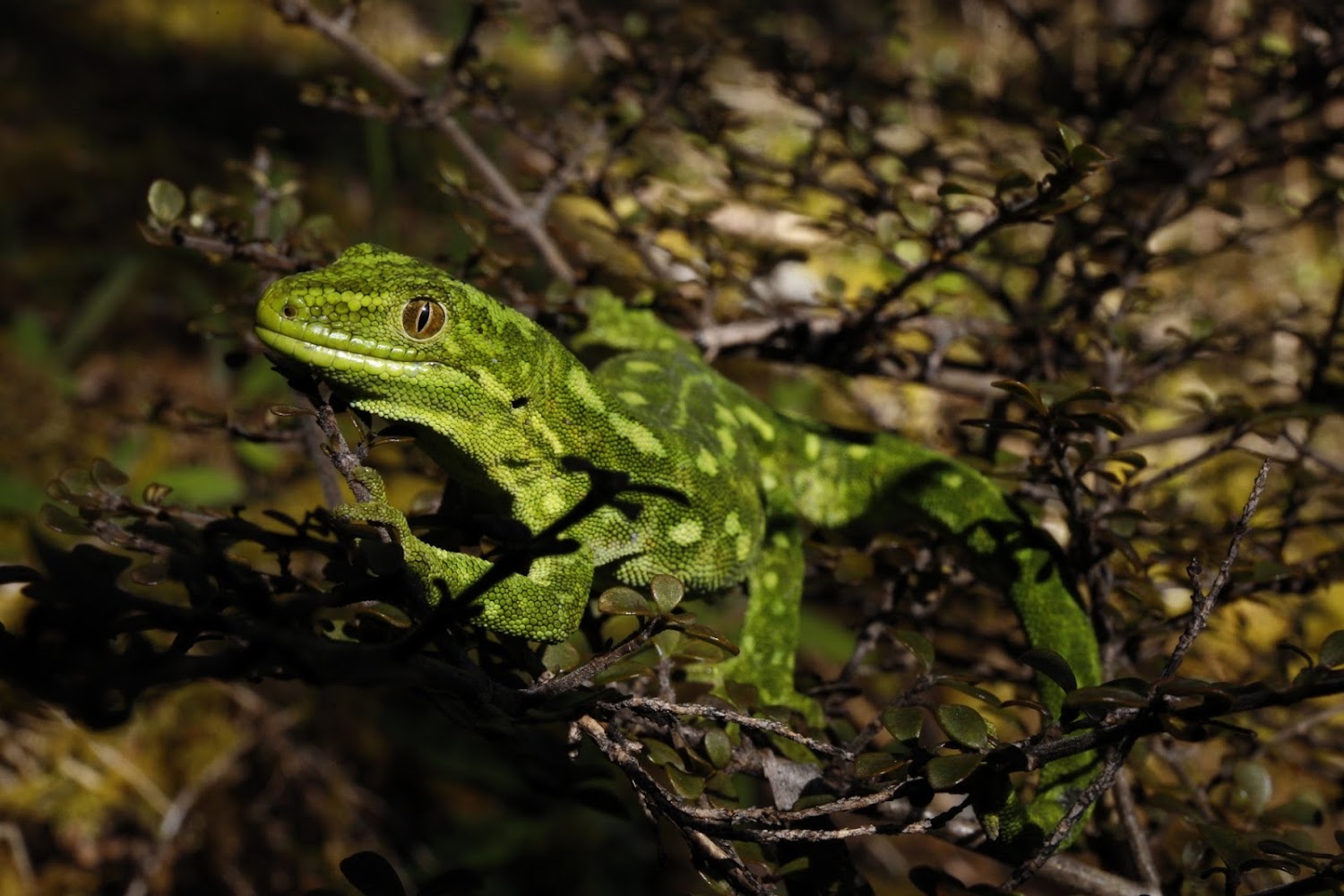
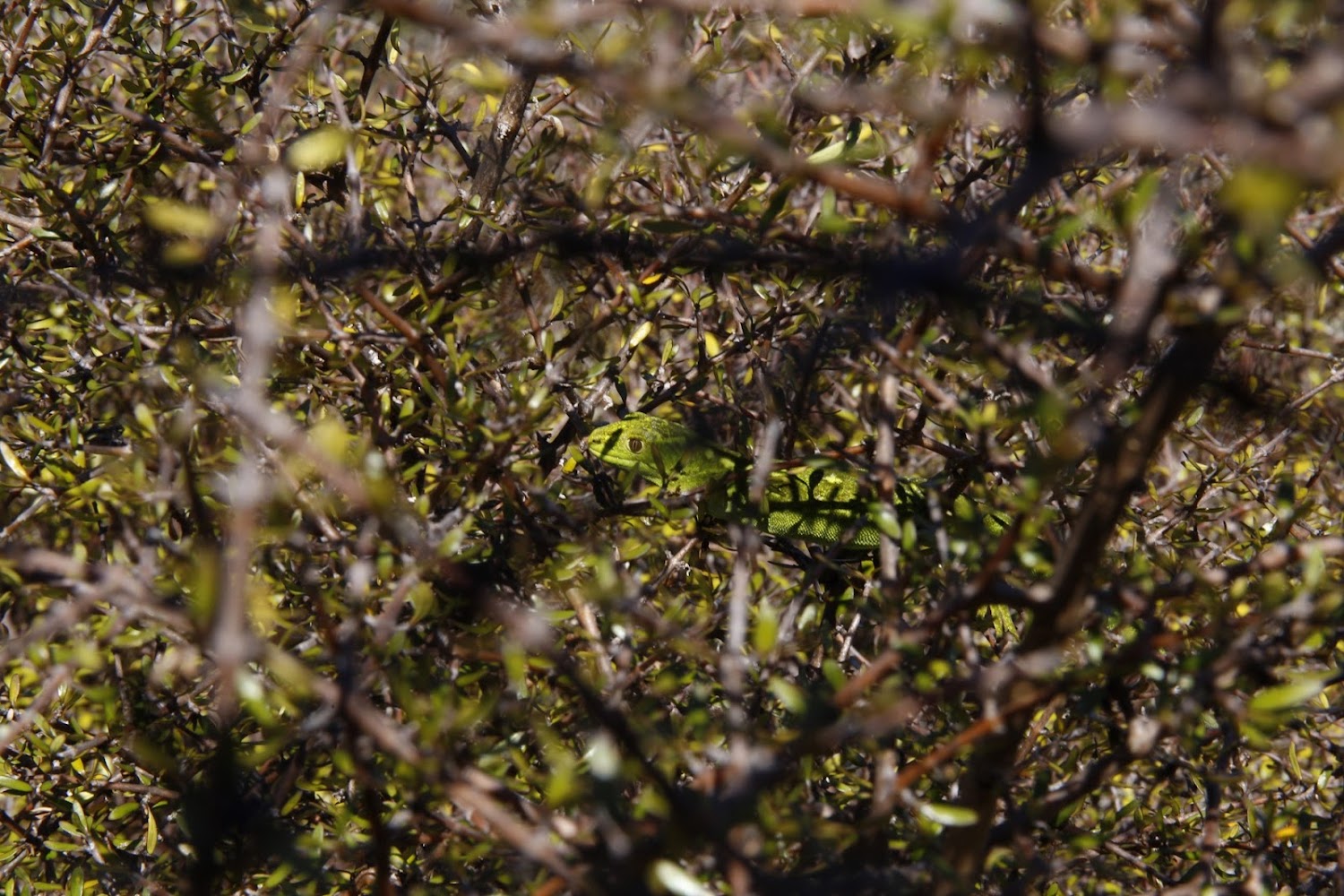
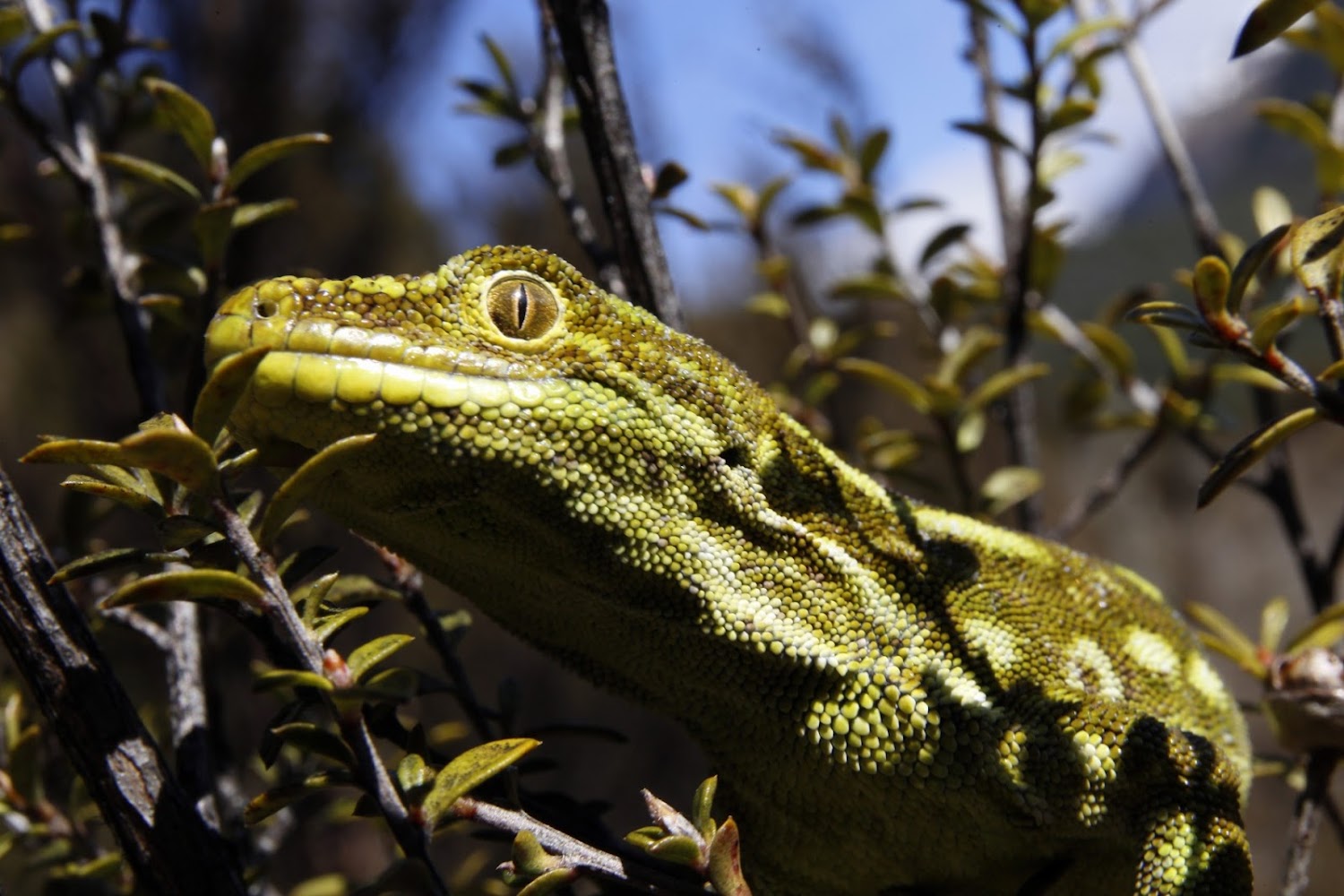
A robust, green gecko with intricate moss-like patterns that help it blend in with the unique moss-covered habitats of the western South Island. Two forms are currently recognised.
Lewis Pass
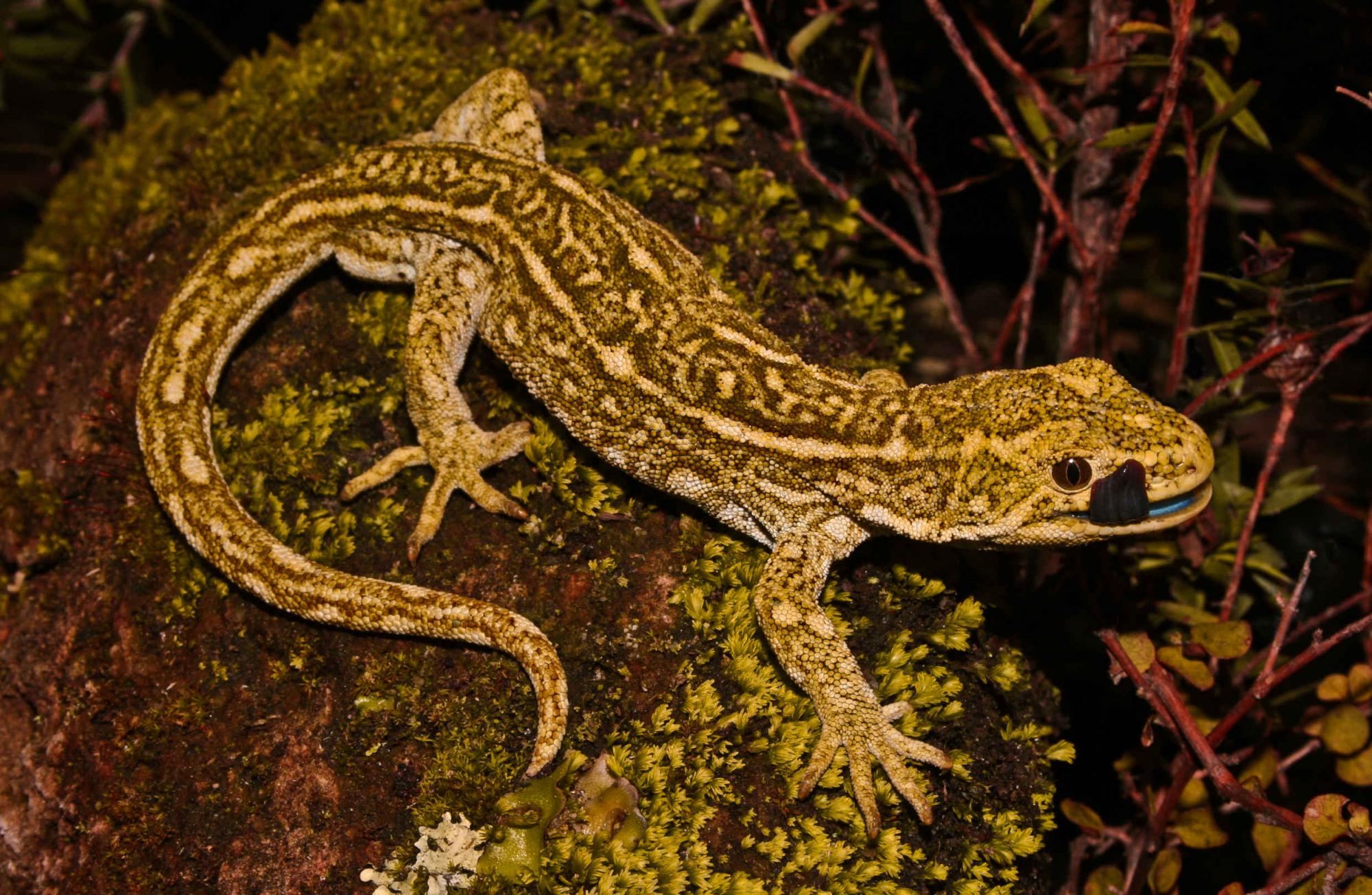
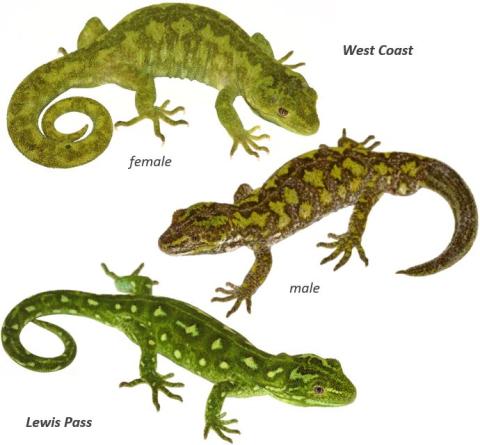
This form is characterised by its browny-green through to lime green speckled dorsal colourations, which is broken up by pale green, yellow-green, or white markings (either striped, blotched, or a combination of both), these are often surrounded by darker green pigments. In addition, these populations also tend to have a pale green mid-dorsal stripe running the length of the body.
The sides of the animals are much the same as the upper surfaces, with the typical moss-like patterning.
The ventral (stomach) colouration is often pale green, but may also have a yellowish tinge to it.
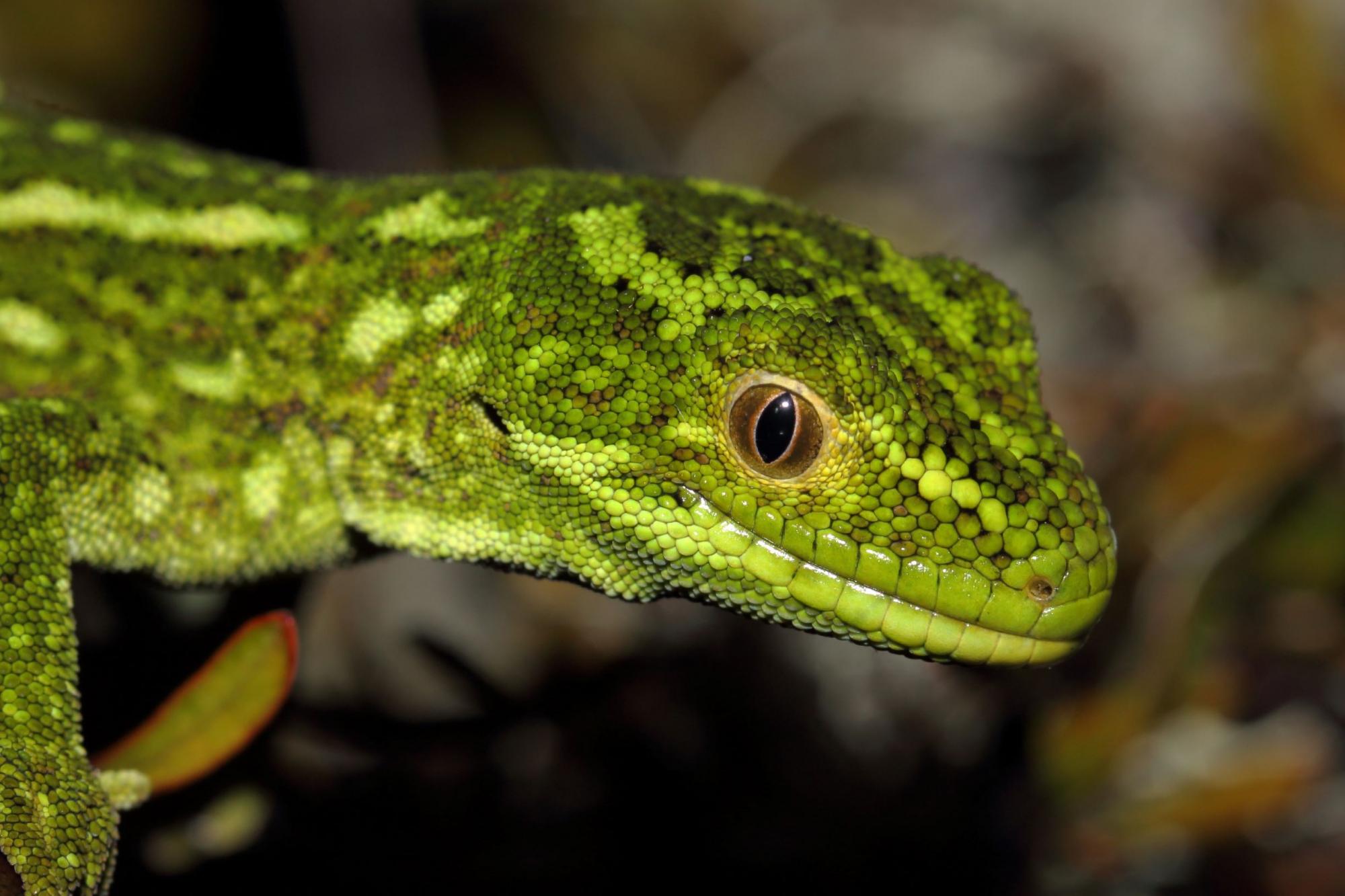
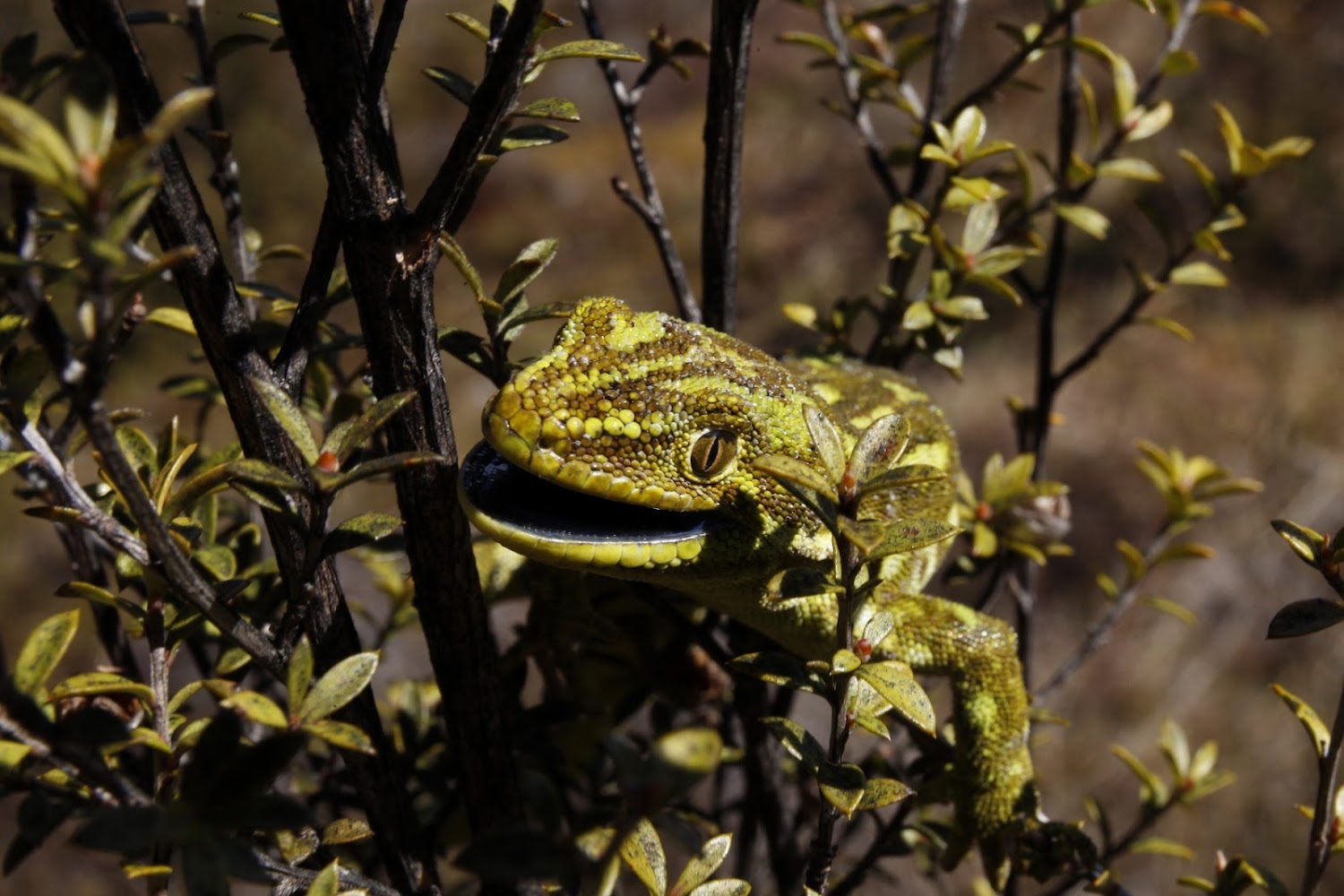
West Coast green geckos are characterised by a blue mouth, with a black/dark blue tongue.
West Coast
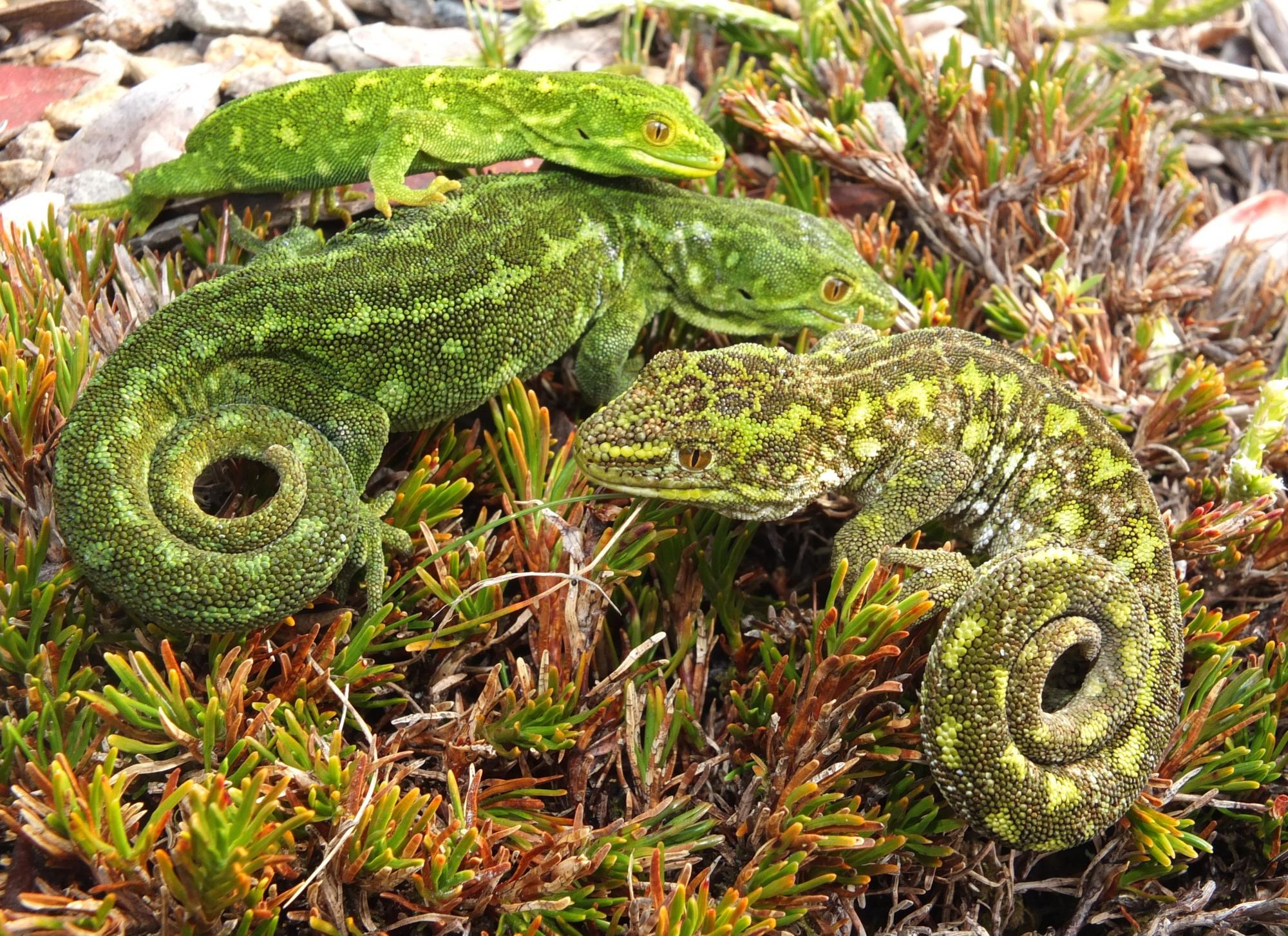
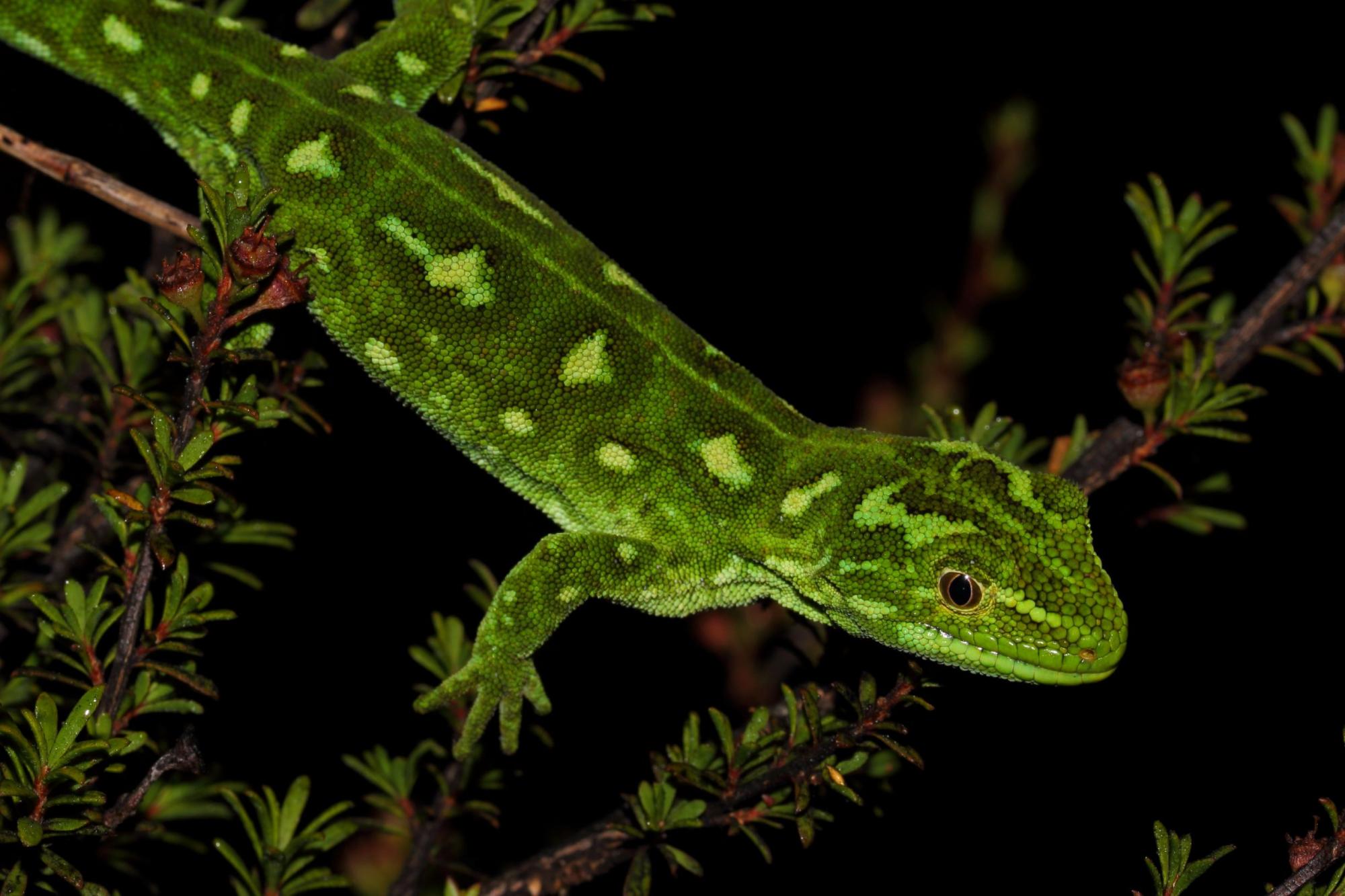
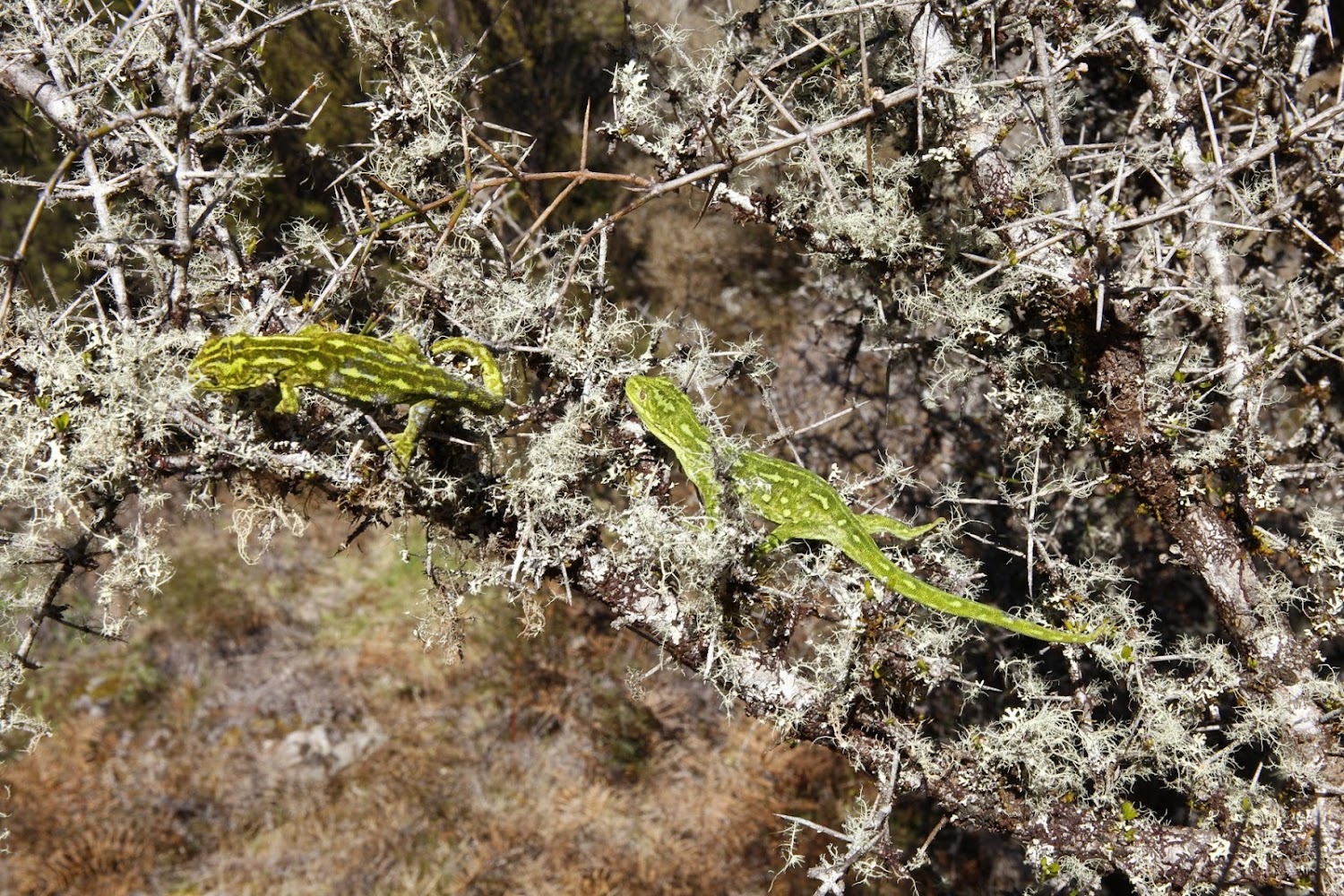
This form is similar in appearance to the Nelson Lakes form of the starred geckos (Naultinus stellatus). As with the former species, they show sexual dichromatism (differences in colour) between males and females. In general, males are characterised by their browny-grey background colouration, which is broken up by pale green, yellow-green, or white markings (either striped, blotched, or a combination of both), these are often surrounded by darker green or brown pigments. Generally, females are similar to their Lewis Pass counterparts, although typically exhibiting a darker green background colouration, and less contrasting markings.
The sides of the animals are much the same as the upper surfaces, with the typical moss-like patterning.
The ventral (stomach) colouration is often pale green, but may also have a yellowish tinge to it.
West Coast green geckos are characterised by a blue mouth, with a black/dark blue tongue.
Juveniles are light green with white/yellow spots when born, but take on the adult appearance between 1-2 years.
Xanthochromic (yellow) individuals are known to occur in this form.
Can be differentiated from the starred gecko (Naultinus stellatus) by a dark-blue/black (versus pink/red) tongue, and from rough geckos (Naultinus rudis) by their relatively smooth (versus heavily spiked) scales.
Life expectancy
The lifespan of West Coast green gecko is largely unknown. However, captive green geckos have frequently been known to live for upwards of 25 years, with some individuals topping the records at 50+ (D. Keal pers. comm 2016). In the wild, green geckos have been recorded as reaching a minimum of ~15 years, although it is likely to be more than this given that the population in question was only monitored from 2009, and those animals are still alive (C. Knox pers. comm 2021).
Distribution
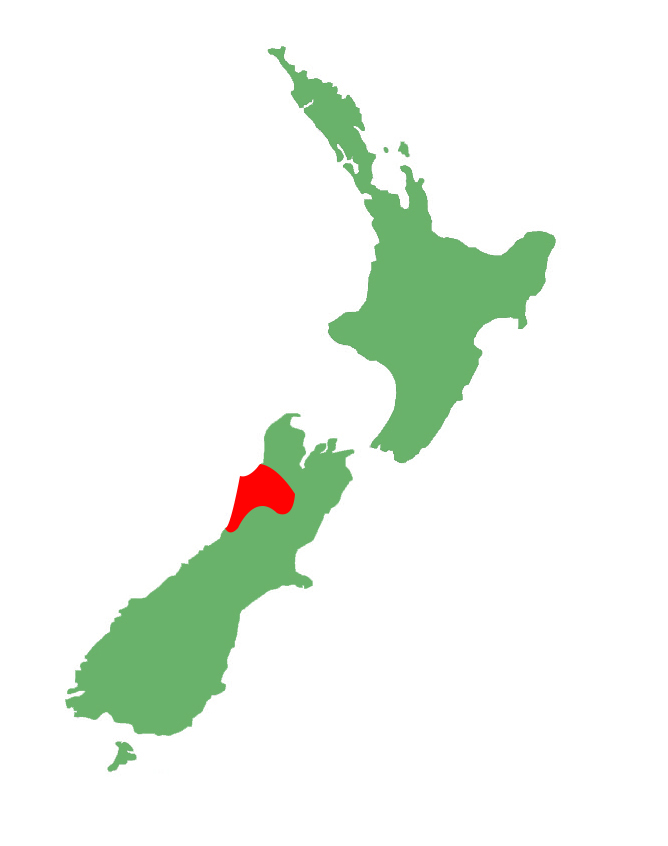
West Coast green geckos are for the most part restricted to the West Coast Region of the South Island, from around the Mokihinui river to around Hokitika. Abberent populations occur further inland around Lewis Pass.
Ecology and habitat
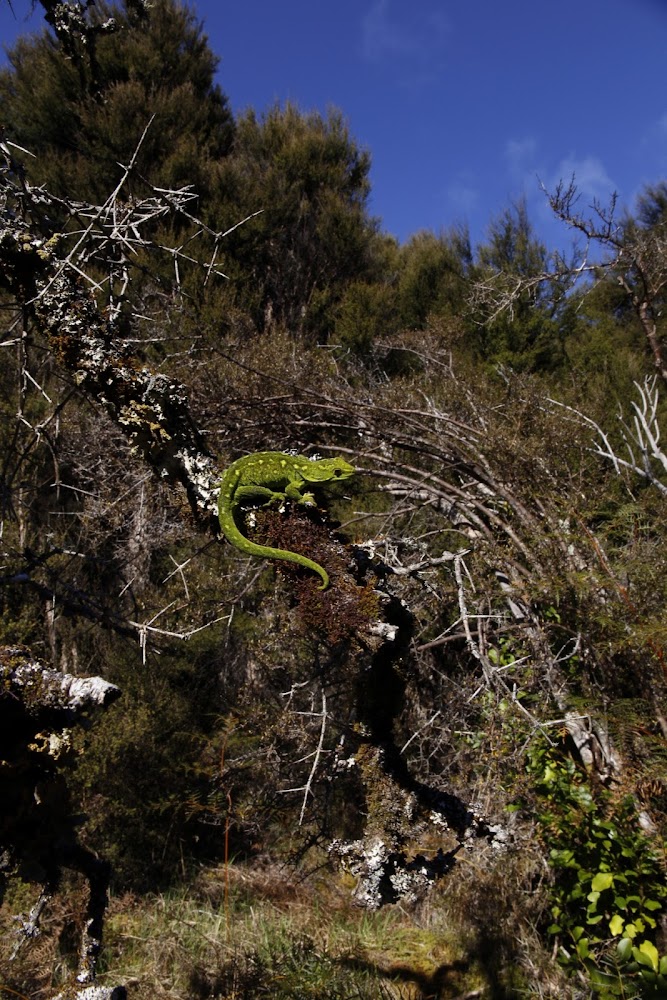
The West Coast green gecko appears to be cathemeral (active both day and night) in nature, although predominantly considered diurnal (day-active), due to its strongly heliothermic nature (being an avid sun basker). As with all members of the Naultinus genus they are primarily arboreal (tree-dwelling), although some populations tend to be much more terrestrial than our other green geckos, preferring prostrate (ground-hugging) vegetation. Typically found in close proximity to the ground during inclement weather, or in the case of males during the breeding season when they are in search of mates. As with all green geckos, they possess a strongly prehensile tail which acts as a third-limb/climbing aid when moving through shrubs and trees. They are known to mouth gape and produce a barking sound as a defensive behaviour against potential predators.
Being an arboreal species, West Coast green geckos are closely associated with forested habitats, and thus inhabit a wide variety of forest types in the West Coast region, including swamps, scrubland, and mature forest, although some populations prefer the low scrub associated with alpine environments. They appear to favour scrubby/regenerating habitats, but this may be a result of the relative ease of access, and the amount of search effort that these sites garner.
Social structure
The West Coast green gecko is solitary in nature, although can be found at fairly large densities in some habitats. Males show aggressive behaviour toward congeners, especially during the breeding season, and this is easily observable with many males showcasing scarring over their bodies. Mate guarding seems to occur in this species, with males often found in close proximity to females prior to birthing. Although independent at birth, neonates (babies) are often found together and close to the mother for the first few months of life.
Breeding biology
Like all of Aotearoa's gecko species, the West Coast green gecko is viviparous, giving birth to one or two live young annually, from around April/May.
As is the case with many lizard species, mating in green geckos may seem rather violent with the male repeatedly biting the female around the neck and head area. Sexual maturity is reached between 1.5 to 2 years.
Diet
West Coast green geckos are omnivores. They are primarily insectivorous in nature, but are also known to feed on the nectar, and small fruits of several plant species, and the honeydew of scale insects when they are seasonally available. Being arboreal in nature, their invertebrate prey tends to be predominantly composed of flying insects (moths, flies, beetles), and small spiders.
Disease
The diseases and parasites of Aotearoa's reptile fauna have been left largely undocumented, and as such, it is hard to give a clear determination of the full spectrum of these for many species.
The West Coast green gecko, as with many of our other Naultinus species, is a host for at least one species of endoparasitic nematodes in the Skrjabinodon genus (Skrjabinodon poicilandri), as well as at least one strain of Salmonella. Similarly, it is unlikely to be a host for ectoparasitic mites in the wild. Captive collections have been known to host mites, but these have likely shifted onto the animals from different species e.g. Mokopirirakau, Dactylocnemis, and Hoplodactylus geckos.
Wild green geckos have been found with pseudobuphthalmos (build-up of liquid in the spectacle of the eye) and Disecdysis (shedding issues).
Conservation status
Listed in the most recent threat classification as 'Threatened - Nationally Vulnerable', due to a mix of land development/clearance of habitat, predation by mammalian predators, and competition/predation from Vespula wasps.
Interesting notes
The specific name 'tuberculatus' (meaning warty or covered in bumps in Latin) references the enlarged scales found on their head and to a lesser extent on their body. The common name refers to their distribution on the West Coast of the South Island.
A distinctively patterned population of West Coast green geckos in the Lewis Pass area show evidence of past hybridisation with rough geckos (Naultinus rudis), and were once regarded as a separate species - the Lewis Pass green gecko (Naultinus poecilochlorus).
References
Gill, B.J., & Whitaker, A.H. (1996). New Zealand frogs and reptiles. Auckland: David Bateman Limited.
Jewell, T. (2011). A photographic guide to reptiles and amphibians of New Zealand. Auckland: New Holland Publishers Ltd.
Robb, J. (1980). New Zealand amphibians and reptiles in colour. Auckland, New Zealand: Collins.
van Winkel, D., Baling, M. & Hitchmough, R. (2018). Reptiles and Amphibians of New Zealand: A field guide. Auckland: Auckland University Press, 376 pp.