Oligosoma aff. laxa "central Canterbury"
Canterbury scree skink
Oligosoma aff. laxa "central Canterbury"
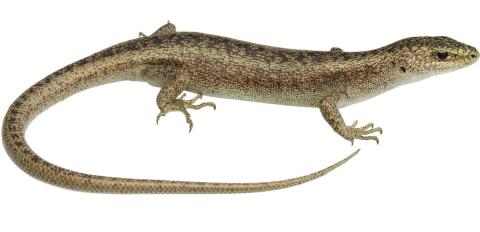
Length: SVL up to 114 mm, with the tail being much longer than the body length
Weight: Up to at least 28 grams
Description
A large slate-coloured skink perfectly adapted to the rocky scree and braided river systems of the Canterbury Region. Although, once considered a single variable species stretching from Marlborough, through to Otago, a number of genomic studies resulted in the broader scree skink complex being split into three separate taxa.
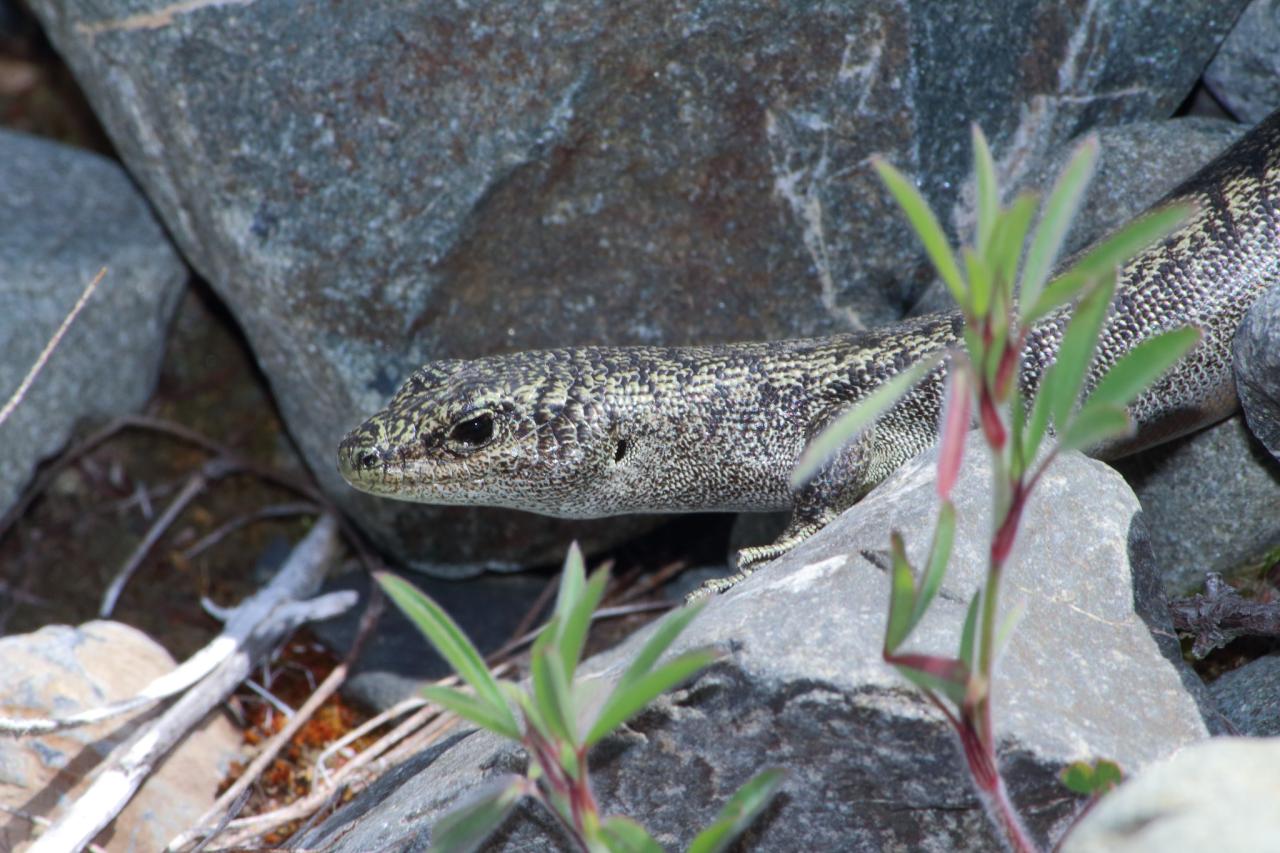
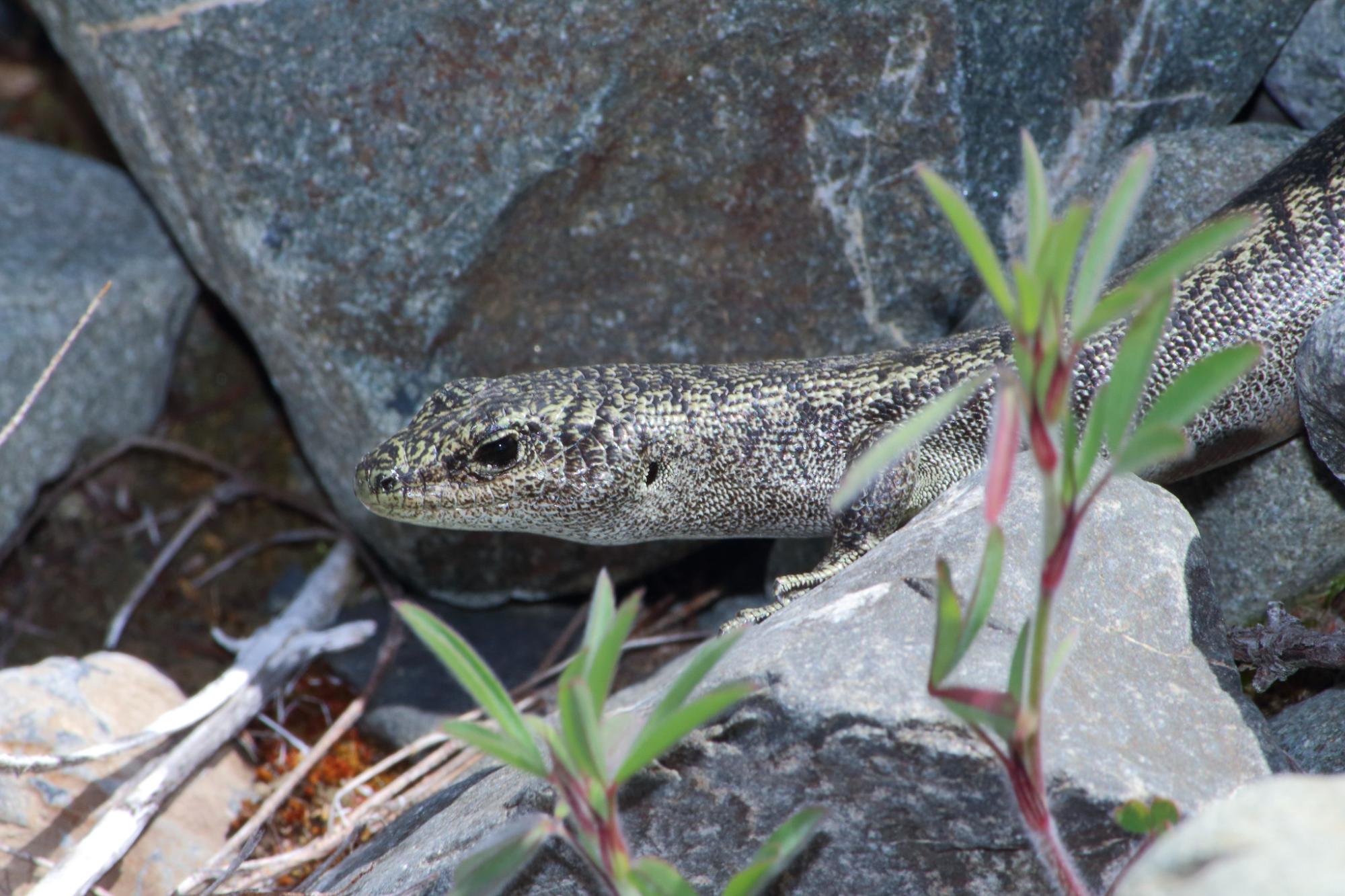
Canterbury scree skinks are characterised by their typically drab pale or dark grey (sometimes with olive-green tint) dorsal surfaces, punctuated with subtle black transverse bands and conspicuous dense speckles. Another characteristic of this species is that they occasionally have a "gap" along the dorsolateral area, where black bands and dense speckles are absent. The lateral surfaces are similar to the dorsal surface; however, the black bands are often absent. Instead, only dense black or brown speckles are present. In Canterbury scree skinks, the transition from the dorsal basal colour to the ventral surface colour is less abrupt than in other scree skink taxa. Ventral surfaces are similar to the lateral surfaces, but more uniform pale grey with few speckles and sometimes a pale orange hue.
The Canterbury scree skink is fairly similar to both the Marlborough scree skink (Oligosoma aff. waimatense "Marlborough") and Otago scree skink (Oligosoma laxa) in appearance, but they do not typically co-occur, with the former occurring north of the Waiau Uwha River, and the latter occurring south of Lake Tekapo. Canterbury Scree skinks do co-occur with the northern alpine rock skink (Oligosoma aff. laxa "alpine rock northern"), but can be differentiated by their stocky (vs. gracile) build, and mottled (vs. uniform streaked) pattern.
Life expectancy
Upper limit unknown. However, it is probable that this species can live over 20 years.
Distribution
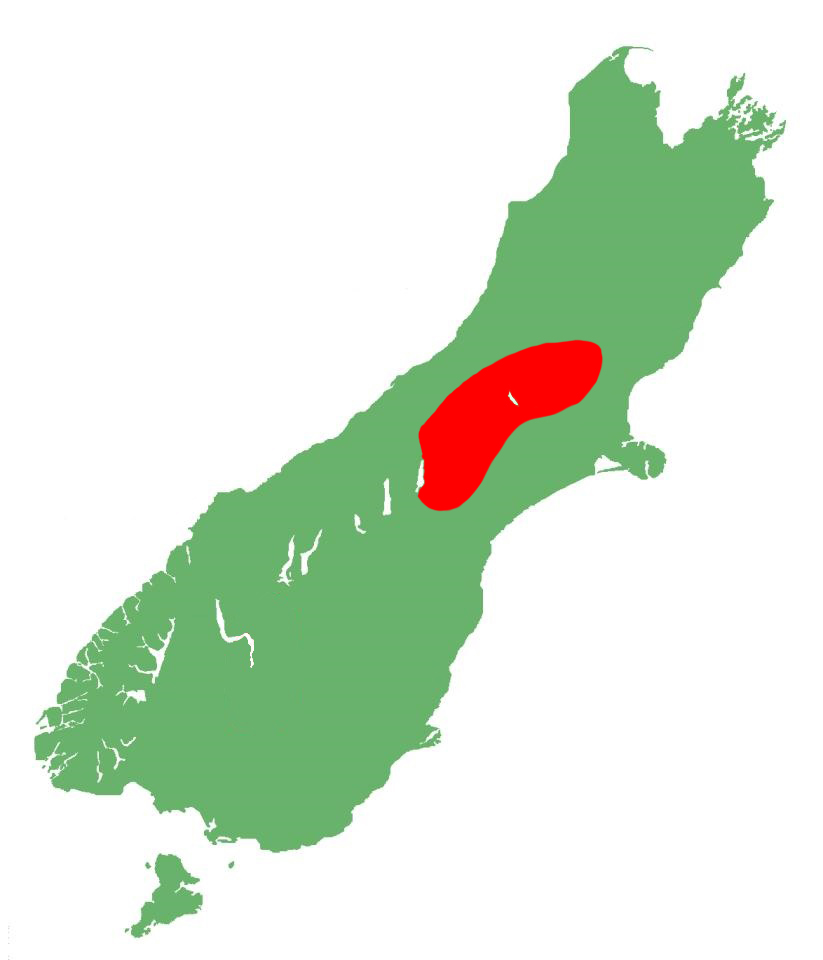
The Canterbury scree skink occurs in central Canterbury from around Lake Tekapo through to Lake Coleridge in the north. It is likely that many populations as far north as the Waiau Uwha River belong to this species, although better sampling is needed to confirm this.
Ecology and habitat
Scree skinks are diurnal, saxicolous, and avidly heliothermic. They are renowned for being highly active and mobile, with a maximum recorded home range size of 950 metres squared (Lettink and Monks, 2019). Scree skinks occur in both the lowlands and subalpine environments. They typically inhabit dry rocky areas with suitable refugia (their large size renders them more vulnerable to predators). These include boulderfields, screes, talus, stony river terraces and banks, rocky shrubland, and rocky bluffs.
Social structure
Unknown.
Breeding biology
Largely unknown, however, scree skinks may breed annually or biennially. Reproductive maturity is thought to be a minimum of 4-5 years of age (Lettink and Monks, 2019).
Diet
Invertebrates, smaller lizards (possibly including conspecifics), and native fruits.
Disease
Unknown.
Conservation strategy
Scree skinks are highly vulnerable to mammalian predation, partly because of their large size. Consequently, they only exist in a few areas in lowland habitat (compared to what their former extent would likely have been), and are more common and widespread at higher altitudes. However, when considering the decline of other mainland lizard populations, including other scree skink populations, it is probable this species is declining as a whole (Lettink and Monks 2019). A decade-long study by Lettink and Monks (2009) indicated that severe flooding and weather events may be a serious threat to scree skink populations. Following a severe weather event, a decline of 84% was observed in one scree skink population. This population gradually recovered after approximately 8.5 years unmanaged (Lettink and Monks 2019).
The authors of this comprehensive study made several highly useful conservation recommendations. Firstly, they suggested that monitoring at their study site continue, as studying a flood-prone population of scree skinks is highly valuable in the context of climate change. They also suggested that other scree skink populations be monitored long-term (e.g. 10 years) in scree systems, as their study site is fairly atypical of the species usual habitat. They also recommended that wilding conifers and other exotic trees should be controlled at scree skink sites, as shading out of habitat is thought to be a possible threat to scree skinks (Whitaker 2008; ML unpbl. data).
Interesting notes
Scree skinks are closely related to Otago skinks (Oligosoma otagense). Wild scree skinks in the Otago area show introgression with Otago skinks, and Marlborough scree skinks (Oligosoma aff. waimatense "Marlborough") have also been known to inadvertently hybridise with Otago skinks in captivity.
During research into the scree skink complex, Tony Jewell came across a holotype of a species referred to as Mocoa laxa, which had been relegated to a synonym of the grand skink (O. grande) for over a century. However, he noted that the description given to this specimen was more in line with the appearance of a scree skink. After the acquisition of a photo series from the British Museum of Natural History, it became apparent that the specimen in question was undoubtedly a scree skink from the southern extent of their range. As such this may require a correction to the species name from Oligosoma waimatense to O. laxa in future (Jewell, 2023).
References
Jewell, T. (2023). Oligosoma laxa (Hutton 1872): an overlooked name for the New Zealand scree skink (Reptilia: Scincidae). Jewell Publications, Occasional Publication #2023A.
van Winkel, D., Baling, M. & Hitchmough, R. (2018). Reptiles and Amphibians of New Zealand: A field guide. Auckland: Auckland University Press, 376 pp.
Whitaker T 2008. Conservation of lizards in Canterbury Conservancy. Canterbury Series 308. Christchurch, Department of Conservation.