Mokopirirakau cryptozoicus
Tākitimu gecko
Mokopirirakau cryptozoicus
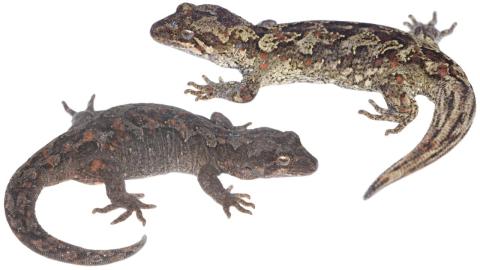
Length: SVL up to 87mm, with the tail being shorter than the body length
Weight: up to 18 grams
Description
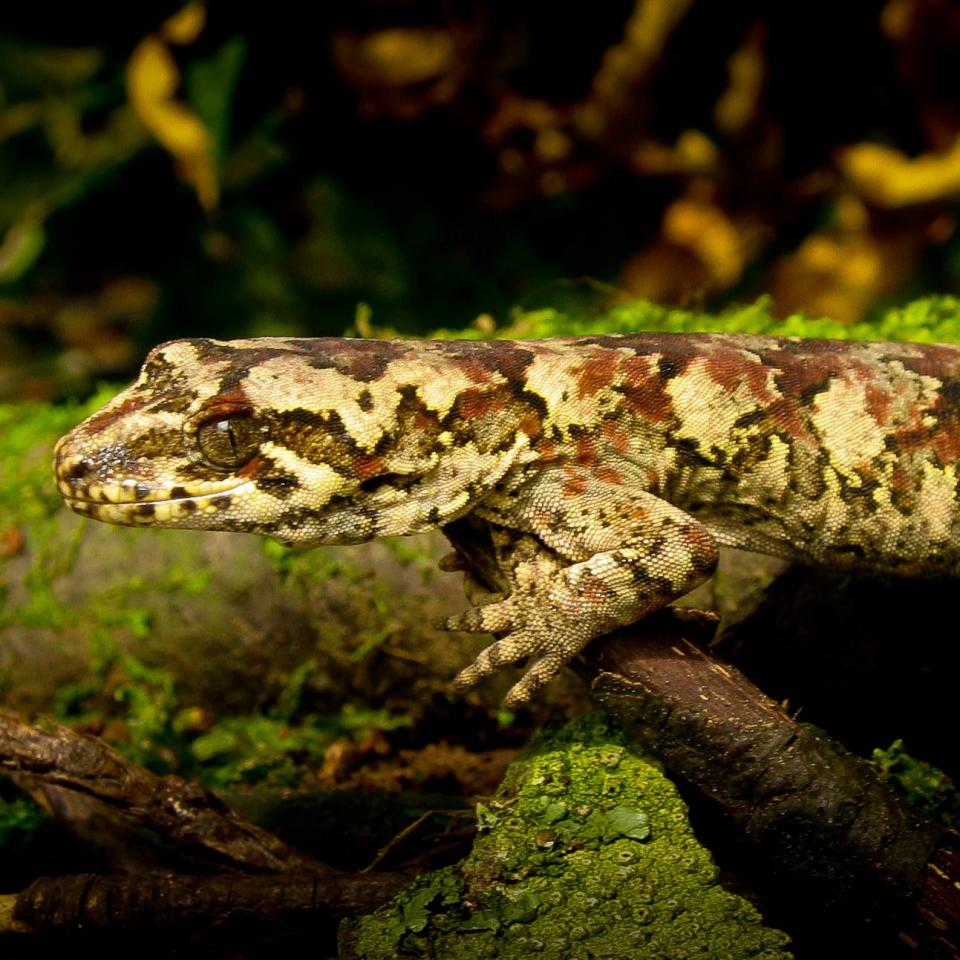
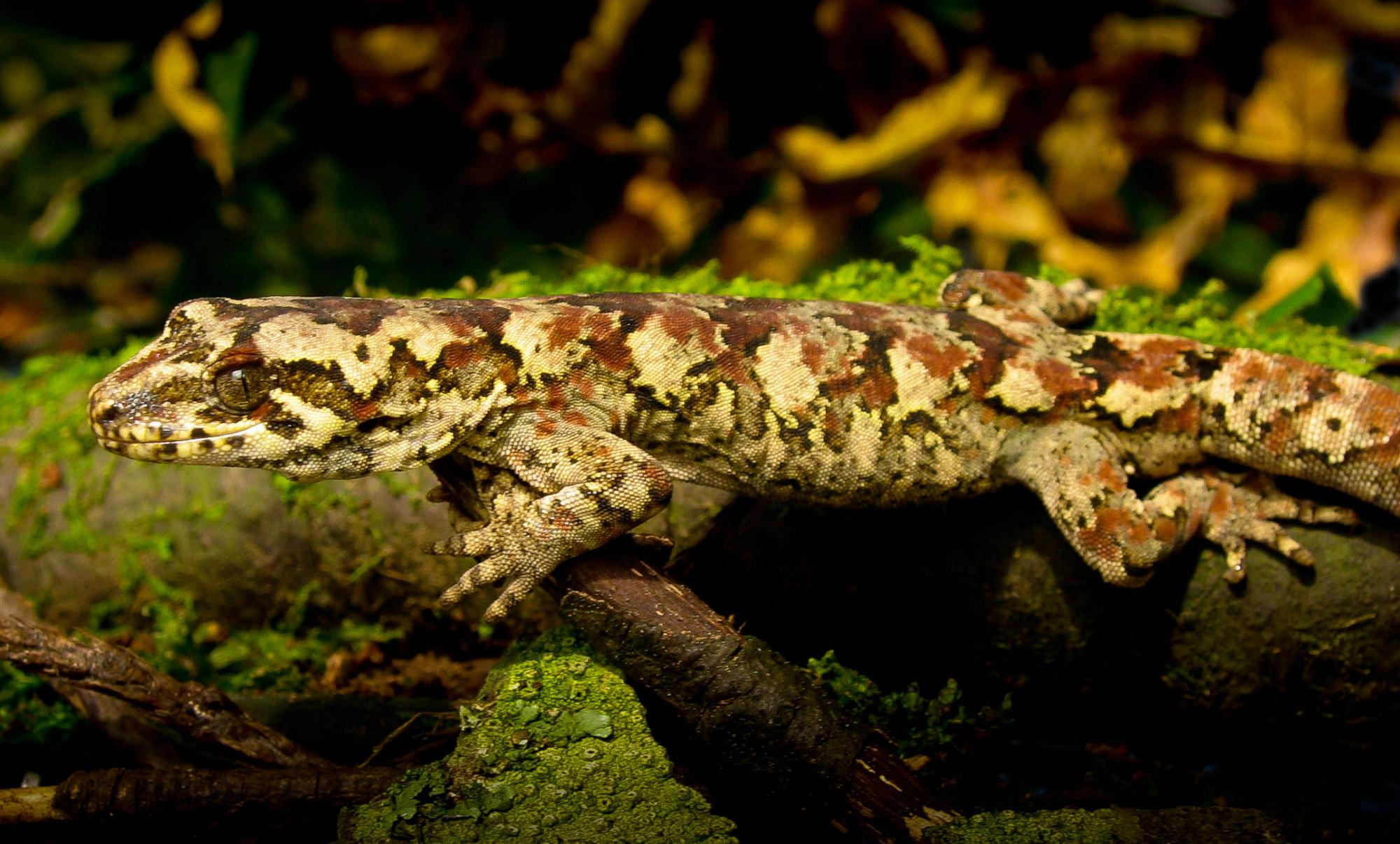
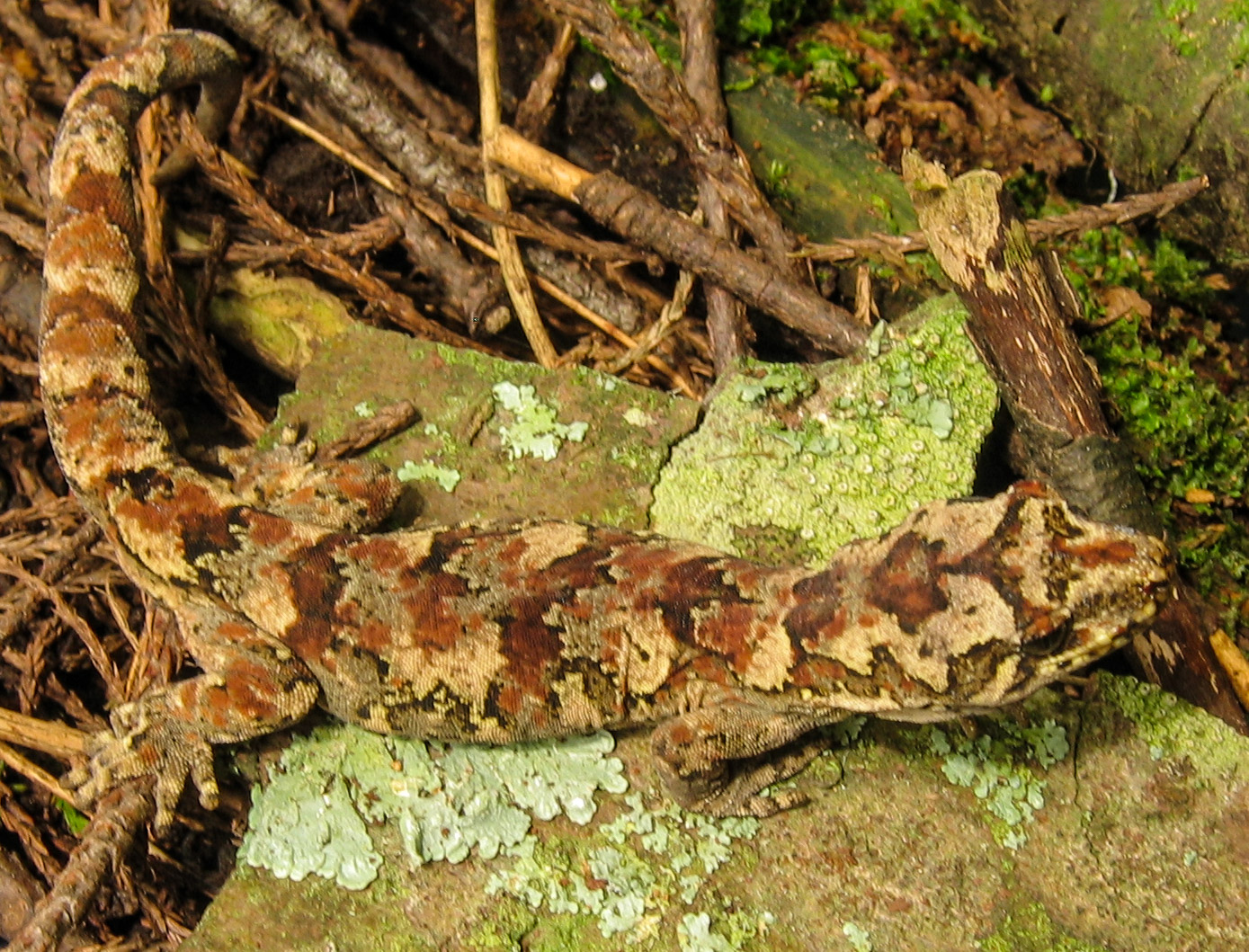
A magnificent and highly elusive species of Mokopirirakau found in the remote mountainous country surrounding Fiordland National Park.
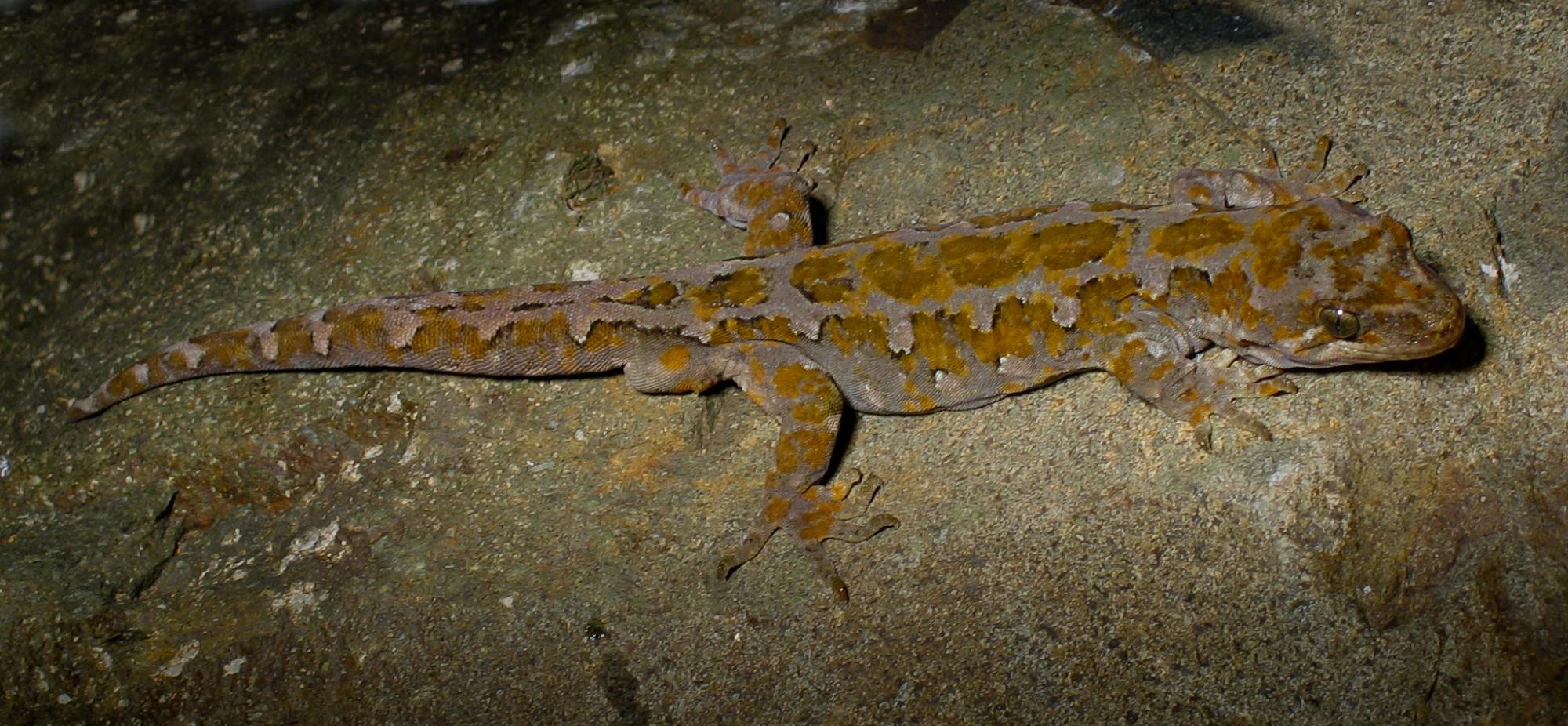
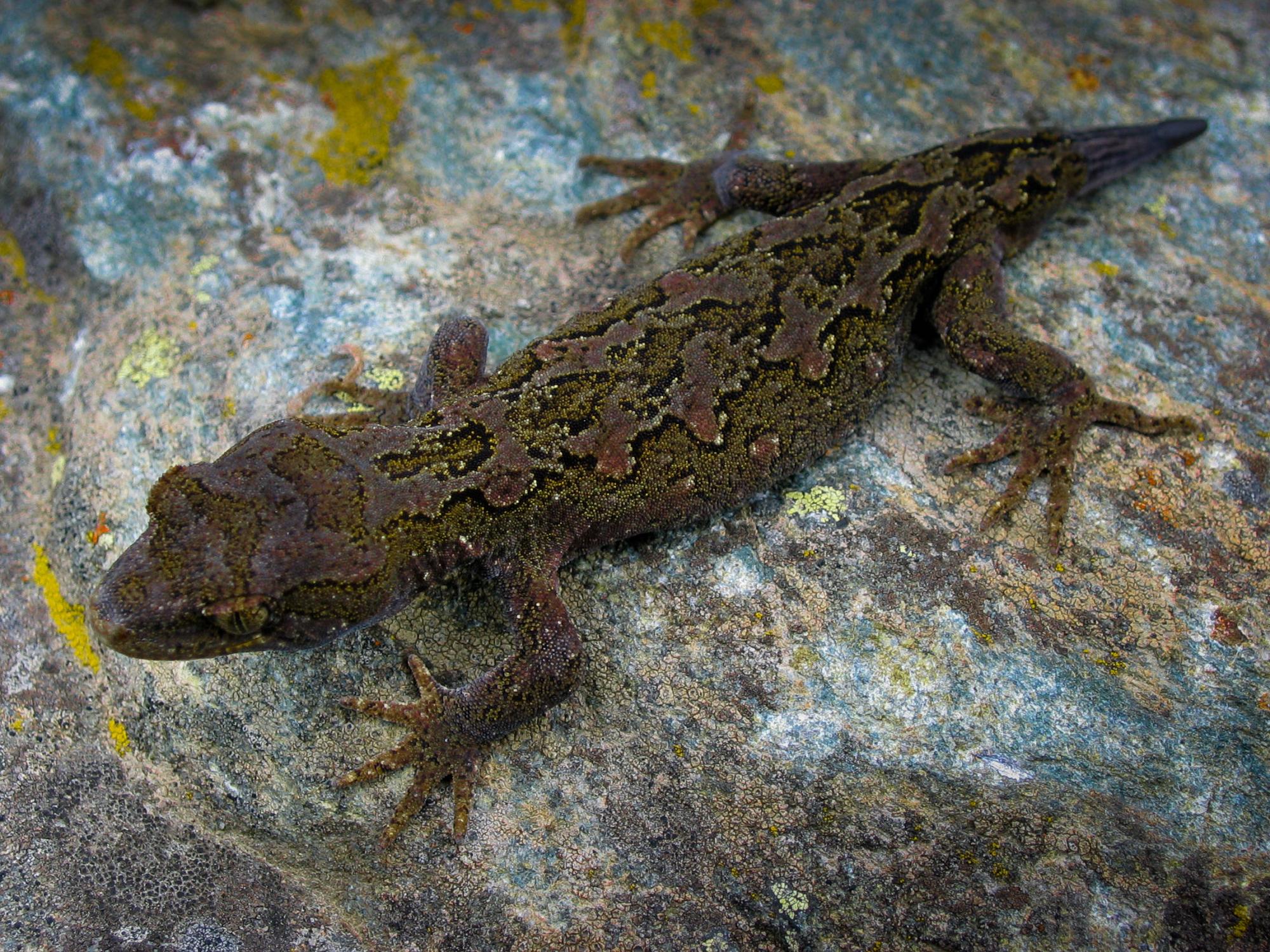
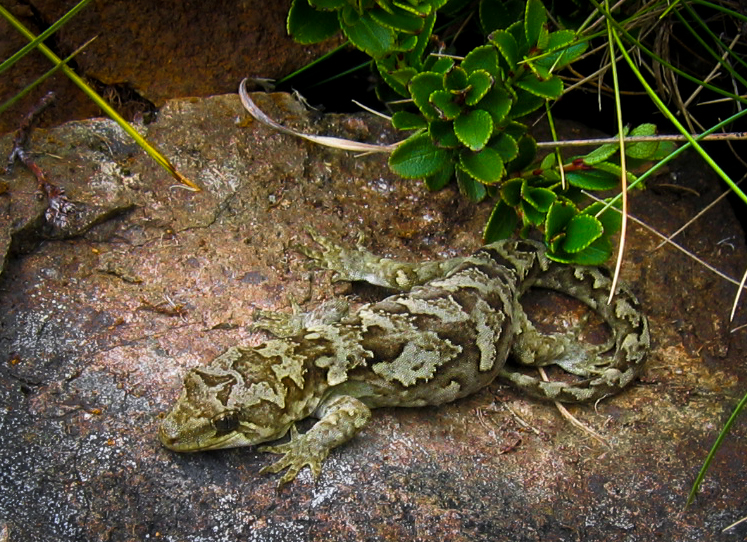
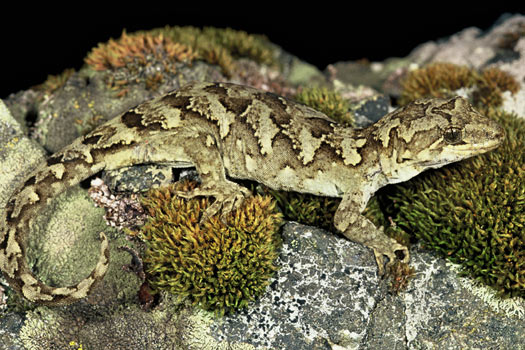
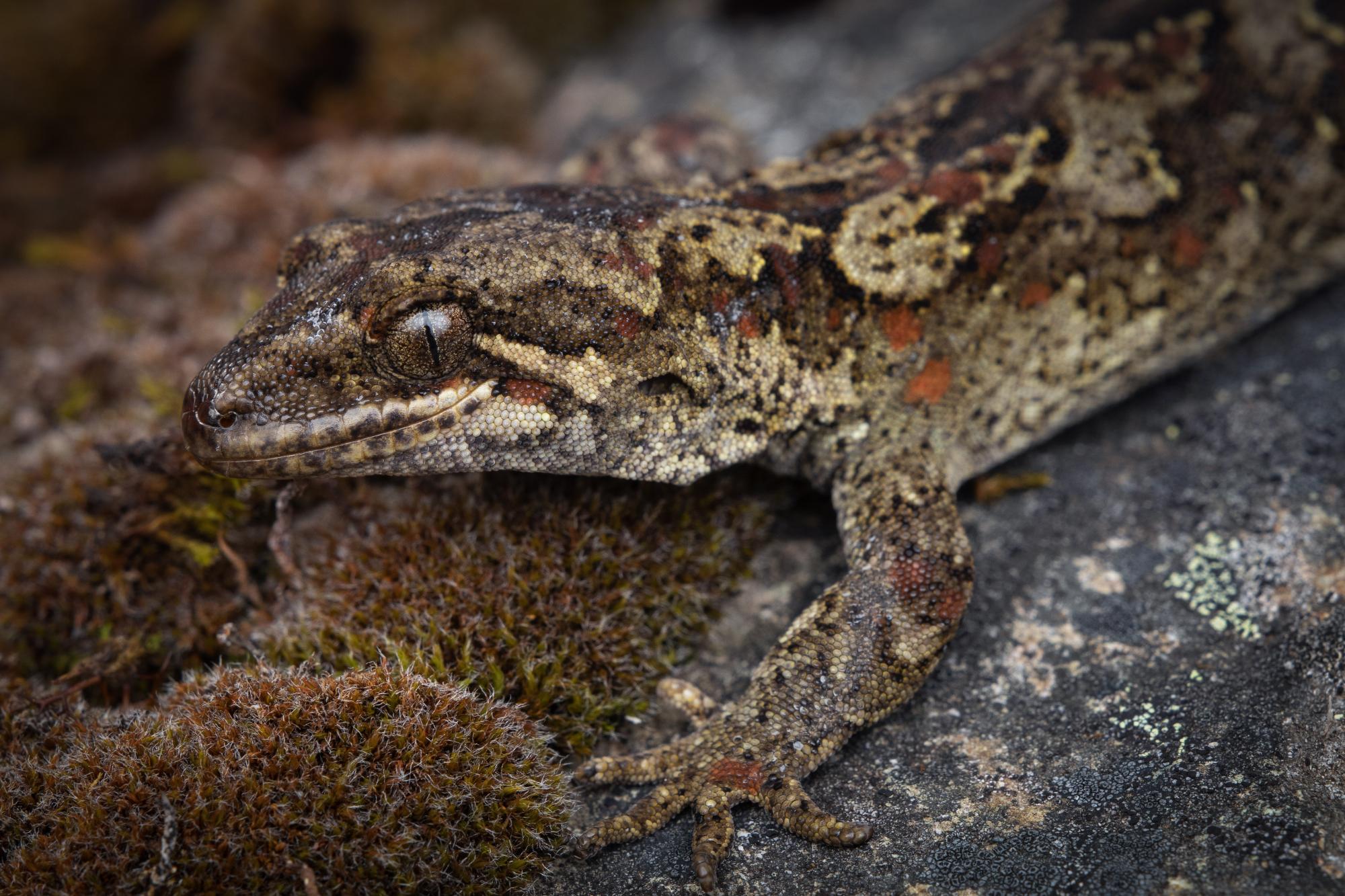
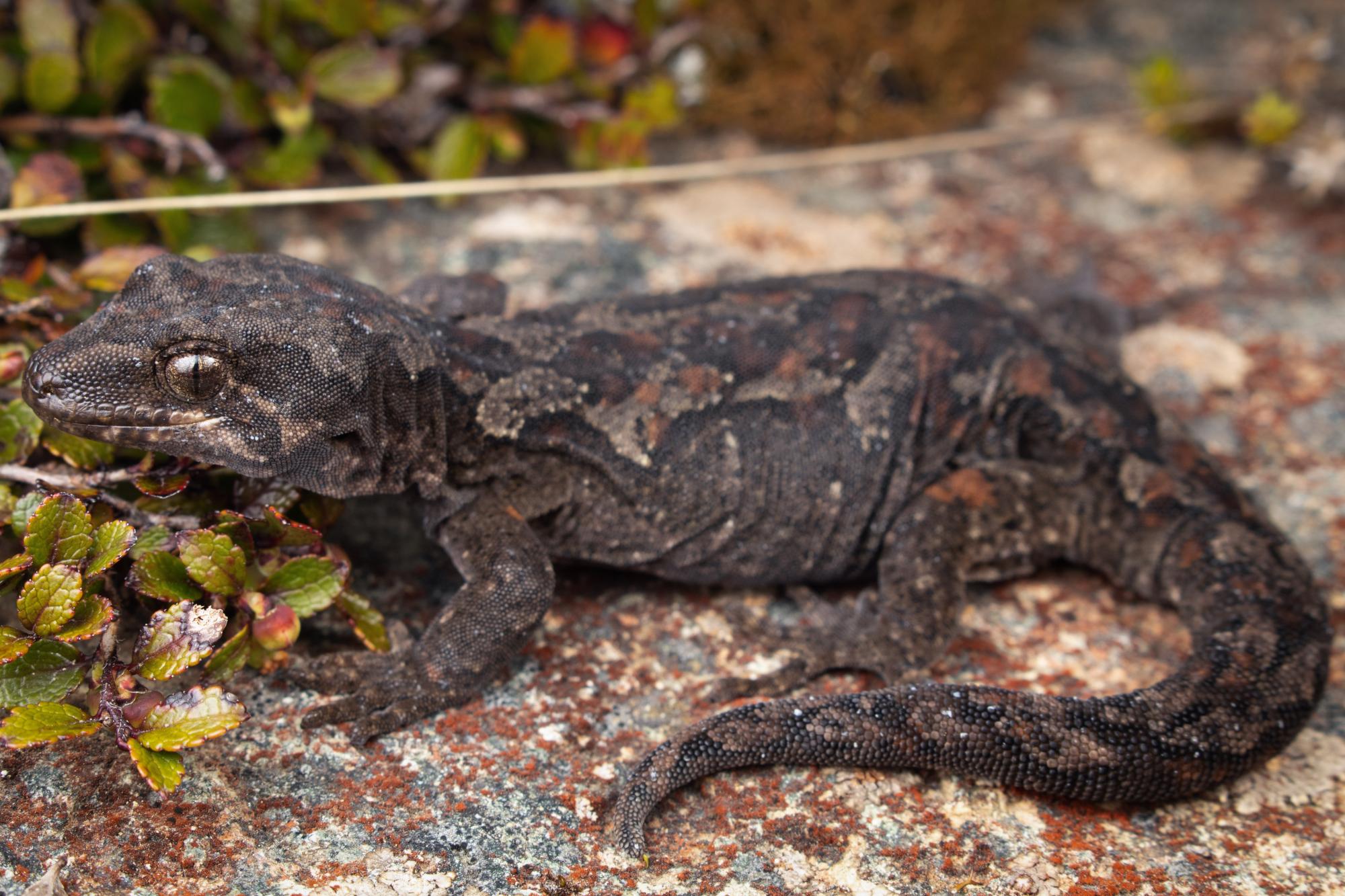
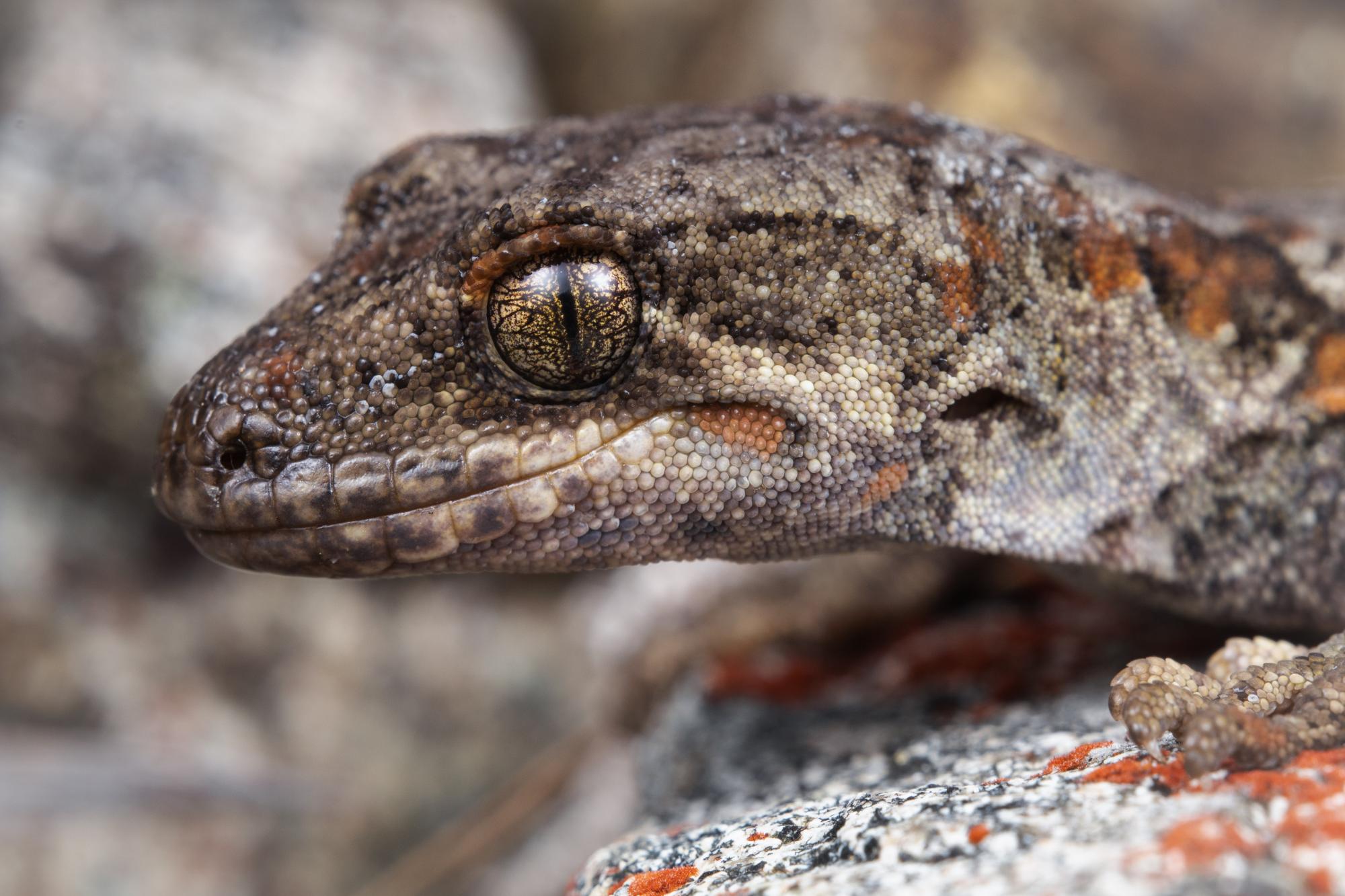
They are characterised by their dorsal surfaces which are slate grey, dark brown or cream-grey with pale herringbone markings, and are often joined along the mid-dorsal region, forming large transverse blotches and/or longitudinal stripes. In addition to this, some individuals also possess brilliant orange, red, or purple-grey blotches or spots. These often form dense aggregations and constitute a considerable portion of the overall dorsal surface colour. Dorsal patterns often edged black and continue down the intact tail. A dark V-shaped marking is present on the top of the head between the eyes, similar to other Mokopirirakau, in addition to a pale canthal stripe running from the nostril through the eye to the ear. Lateral surfaces are similar in colouration to the dorsal surface, sometimes with irregular blotches or spots the same colour as those seen on the dorsal surface. Both dorsal and lateral surfaces can bear dark speckles. The ventral surface is typically mottled and pale grey or pale yellow-pink. Eye colour brown or pinkish. The interior of the mouth is bright orange with a pink tongue, which sometimes has a diffuse grey tip. Intact tails are typically shorter than body length (SVL). The soles of their feet are typically brown-orange (van Winkel et al. 2018; Jewell 2008; Jewell and Leschen 2004).
Life expectancy
Largely unknown, however, captive Mokopirirakau have frequently been known to live for upwards of 25 years, with some individuals topping the records at 40+ (D. Keal pers. comm 2016). The maximum age for wild animals is not known, however, it is likely that they can live at least as long as captive animals, if not longer.
It is theorised that alpine populations of Mokopirirakau may have longer lifespans than their lowland cousins due to the reduced metabolic activity of these species over extended periods of time. If this is the case it wouldn't be unfair to assume that these species could live well into their 80s, or even reach ages in excess of 100 years.
Distribution
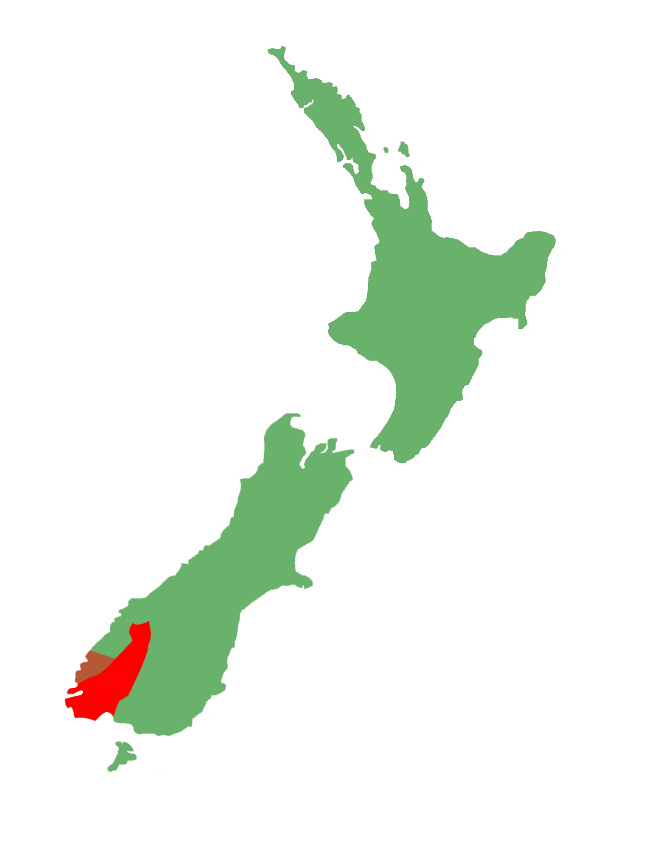
Known from Western Otago and Southland. Found in the Tākitimu Mountains, Rees Valley, northern Richardson Mountains, and Waitutu Forest. A population was also recently discovered on Resolution Island (van Winkel et al. 2018; Jewell 2008; Jewell and Leschen 2004).
Ecology and habitat
Tākitimu geckos are primarily nocturnal or cathemeral and may cryptically bask. This species is highly saxicolous and terrestrial. Tākitimu geckos inhabit alpine/subalpine creviced bluffs, screes (particularly those with vegetation in the middle or on the periphery), and rock outcrops. This species has also been found in mature beech and podocarp/hardwood forest. Tākitimu geckos exist from lowland areas up to 1450m (Jewell and Leschen 2004).
Social structure
The Tākitimu gecko is solitary in nature, although they may on occasion share refugia with other individuals. As is the case with other Mokopirirakau it is theorised that males likely show aggression to other males during the breeding season. Neonates (babies) are independent at birth.
Breeding biology
As with all of Aotearoa's gecko species, the Tākitimu gecko is viviparous, giving birth to one or two live young biennially (once every two years). A gravid female bearing two embryos has been recorded in January (van Winkel et al. 2018).
Mating in Mokopirirakau may seem rather violent with the male repeatedly biting the female around the neck and head area. Sexual maturity is probably reached between 1.5 to 2 years as with other Mokopirirakau, however, it may take up to 4 years in some of these alpine species.
Diet
They are primarily insectivorous in nature, but are thought to feed on the nectar, and small fruits of several subalpine plant species when they are seasonally available. Being terrestrial in nature, their invertebrate prey tends to be predominantly composed of moths, spiders, weta, and other invertebrates that live in the alpine environments
Disease
The diseases and parasites of Aotearoa's reptile fauna have been left largely undocumented, and as such, it is hard to give a precise determination of the full spectrum of these for many species.
The Tākitimu gecko, as with other Mokopirirakau species, is a likely host for at least one species of endoparasitic nematode in the Skrjabinodon genus (Skrjabinodon poicilandri), as well as at least one strain of Salmonella. In addition to this, it is known to be a host for at least one species of ectoparasitic mite - potentially Neotrombicula naultini as this species is known to occur on other members of the Mokopirirakau genus.
Wild Mokopirirakau have been found with Disecdysis (shedding issues).
Conservation
DOC classify the species as 'nationally critical' (Hitchmough et al. 2025), a heightened classification from previous years (Hitchmough et al. 2016). Very few records of Tākitimu geckos exist, particularly in recent years, although this may in some way reflect their elusive nature and relatively remote/inaccessable habitats.
Like many other New Zealand lizards, they have been impacted severely by introduced mammalian predators, which has been exacerbated by ongoing climate change impacts in the alpine zone in recent years. Although no current management is taking place, outside of wide-scale environmental pest control in some of its habitats, it is likely that with its new classification, DOC will be looking to implement more survey effort and pest control to understand population dynamics and ensure their continued survival.
Interesting notes
The Tākitimu gecko gets its common name from the Tākitimu Mountains - the type locality for this species. The specific name 'cryptozoicus' comes from the Latin words kryptos "hidden" and zoikos "living" and gives reference to its cryptic lifestyle within the alpine and forest habitats of the southwestern South Island.
Tākitimu geckos are very closely related to the cloudy gecko (Mokopirirakau nebulosus) from Stewart Island (Chapple and Hitchmough 2016; Nielsen et al. 2011).
The Tākitimu gecko, along with its sister taxon (the cloudy gecko) sit within the Southern clade of the Mokopirirakau genus, with the orange-spotted gecko and Tautuku gecko being their closest relatives within the group.
References
Hitchmough, R.A., Barr, B., Lettink, M., Monks, J., Reardon, J., Tocher, M., van Winkel, D., Rolfe, J. (2016). Conservation status of New Zealand reptiles, 2015; New Zealand threat classification series 17. Wellington: New Zealand Department of Conservation.
Jewell, T. (2008). A photographic guide to reptiles and amphibians of New Zealand. Auckland: New Holland Publishers.
van Winkel, D., Baling, M., Hitchmough, R. (2018). Reptiles and amphibians of New Zealand – a field guide. Auckland university press, Auckland New Zealand.